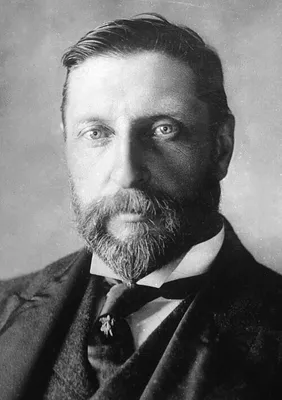
Carl Rider
Henry Rider Haggard was an English author known for adventure romances, lost world tales, and his engagement with land reform.
Henry Rider Haggard, born in 1856, was an English writer celebrated for his adventure romances, often set in exotic locales like Africa, and is considered a pioneer of the lost world literary genre. His extensive body of work includes the popular Allan Quatermain series, beginning with "King Solomon's Mines." Beyond his literary contributions, Haggard was actively involved in land reform initiatives across the British Empire. His narratives, while sometimes reflecting colonial stereotypes, often featured sympathetic portrayals of indigenous populations and heroic non-European characters. He also engaged with spiritual and paranormal interests, collaborating with Andrew Lang on several works. Haggard's writings have left a significant legacy, influencing subsequent generations of authors and creators, with characters like Allan Quatermain inspiring figures such as Indiana Jones.
Early Life and South African Experience
Born in 1856, Henry Rider Haggard was the eighth of ten children. His father, a barrister, and mother, an author and poet, provided a literary background. After attending Ipswich Grammar School and failing his army entrance exam, he was sent to London for Foreign Office exam preparation. During this period, he encountered individuals interested in psychic phenomena. In 1875, his father sent him to South Africa, where he held unpaid positions in colonial administration in Natal and the Transvaal. He was present for the British annexation of the Transvaal in 1877, even assisting in the proclamation ceremony. His early experiences in Africa, including a failed romance and his administrative roles, would later inform his writing.
Literary Career and Themes
Upon returning to England in 1882, Haggard initially published works on South African politics before achieving fame with "King Solomon's Mines" in 1885. This novel, which he sold for a percentage royalty, is often credited as a foundational work of the lost world genre. He followed this success with other popular adventure novels, including "She" and its sequel "Ayesha," which became best-selling works. His stories, while set against the backdrop of colonialism, frequently displayed a surprising degree of sympathy for indigenous peoples, often casting them in heroic roles. He also explored themes of Viking sagas and Zulu tales, demonstrating a broad imaginative scope. Haggard's collaborations with Andrew Lang, who shared his interest in the spiritual and paranormal, further underscore his engagement with less conventional subjects.
Public Life and Legacy
Haggard's involvement extended beyond literature into public affairs, particularly concerning agricultural and social reform. His experiences in Africa and observations in Europe fueled his advocacy for land reform, contributing to legislation like the Development and Road Improvement Funds Act of 1909. He also unsuccessfully ran for Parliament as a Conservative. Knighted in 1912 and appointed a KBE in 1919, his public service was recognized. His literary legacy is substantial; psychoanalyst Carl Jung interpreted his character Ayesha as an embodiment of the anima, and his lost world genre heavily influenced authors like Edgar Rice Burroughs. The character of Allan Quatermain became an archetype for adventure heroes, notably inspiring Indiana Jones. His vivid storytelling was praised for its enduring enchantment.
Key Ideas
- Pioneer of the lost world literary genre
- Adventure romances set in exotic locations, particularly Africa
- Portrayal of indigenous populations with sympathy and heroic roles
- Interest in spiritual and paranormal phenomena
- Advocacy for agricultural and social reform
Books by Carl Rider
2 free public domain books · Read online or download