Carl Chiarenza
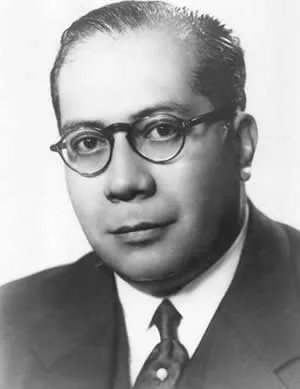
Ramón Carrillo was an Argentine neurosurgeon and the nation's first Minister of Public Health, revolutionizing its healthcare system.
Ramón Carrillo, born in 1906, was a distinguished Argentine neurosurgeon and neurobiologist who rose to become the country's first Minister of Public Health from 1949 to 1954. Educated at the University of Buenos Aires, where he excelled and later studied under prominent figures, Carrillo developed a keen interest in neurology and neurosurgery. His early career was marked by significant scientific contributions to understanding glial cells, developing novel neurological diagnostic techniques like iodoventiculography and a precursor to CT scans (tomography), and classifying brain conditions and mental illnesses. He became a professor of Neurosurgery at the University of Buenos Aires in 1942. Disillusioned with the political climate of the "Infamous Decade," Carrillo aligned with nationalist ideals and forged connections with prominent cultural and political figures. His deep understanding of public health issues, gained from his time at the Central Military Hospital, led him to collaborate with Juan Domingo Perón. As Minister of Public Health, Carrillo implemented sweeping reforms, dramatically increasing hospital beds, eradicating diseases, building numerous hospitals, and lowering mortality rates. He introduced concepts of preventive medicine and applied cybernetics to public administration, creating an "Instituto de Cibernología." Carrillo resigned in 1954 and later went into exile, dying in Brazil in 1956. He is remembered as the architect of Argentina's modern national health system.
Early Life and Scientific Foundations
Ramón Carrillo was born in Santiago del Estero in 1906 into an Afro-Argentine family. He pursued his medical education at the University of Buenos Aires, graduating with top honors in 1929. His early academic path showed a strong inclination towards neurology and neurosurgery, leading him to collaborate with notable neurosurgeons and study under influential professors like Christfried Jakob. Following his graduation, Carrillo expanded his expertise by studying in European neuroscience laboratories. Upon returning to Argentina in the mid-1930s, a period he characterized by significant national decay, Carrillo embraced evolving nationalist political and cultural ideas, befriending key figures in Argentine arts and intellectual circles. His scientific research during this period, spanning from 1930 to 1945, focused on glial cells, microscopic staining techniques, and the evolutionary anatomy of vertebrate brains. He also pioneered new methods for neurological diagnosis, including iodoventiculography and a precursor to computerized tomography, alongside research into brain herniations and cerebral diseases. Carrillo's academic achievements led him to become the Chair of Neurosurgery at the University of Buenos Aires School of Medicine in 1942.
Public Health Leadership and Reforms
Carrillo's career took a significant turn when, through his position at the Central Military Hospital, he gained intimate knowledge of Argentina's public health deficiencies, particularly in rural areas and among conscripts. This experience, coupled with his acquaintance with Juan Domingo Perón, led him to contribute to national health policy planning. After Perón's election as president, Carrillo was appointed head of the State Secretary of Public Health, eventually becoming Argentina's first Minister of Public Health in 1949. During his tenure, supported by figures like Salomón Chichilnisky and President Perón's wife, Evita, Carrillo enacted transformative changes. He oversaw a substantial increase in hospital beds, eradicated endemic diseases like malaria and syphilis, built hundreds of public hospitals, and significantly reduced mortality rates from tuberculosis and among infants. Carrillo emphasized preventive medicine and innovative administrative approaches, including applying cybernetic principles to governance through his 'Instituto de Cibernología.' He also initiated a 'Health Train' service to provide medical care to remote regions.
Later Years and Legacy
Carrillo's influential tenure as Minister of Public Health concluded with his resignation in June 1954, partly due to shifting political support following Eva Perón's death. He was forced into exile after the 1955 coup against Perón and passed away in Brazil in 1956 at the age of 50. Despite the profound impact of his reforms, which established Argentina's modern national health system, Carrillo's contributions were largely overshadowed in subsequent years. His legacy includes numerous hospitals and institutions named in his honor. Efforts to preserve his memory and achievements were undertaken by his brother, Arturo Carrillo, and Professor Daniel Chiarenza, who published biographies detailing his work. In recognition of his significance, the Argentine Government officially declared 2006 the "Year of Honor to Ramón Carrillo."
Key Ideas
- Revolutionized Argentine public health through extensive reforms and infrastructure development.
- Applied principles of cybernetics ('cybernology') to public administration and strategic planning.
- Pioneered advancements in neurological diagnostics and classification of brain conditions.
Notable Quotes
“systematic sacking and destruction of his fatherland, a period characterized by the leaders' deep moral decadence, in which self-imposed corruption, economic felonies, the selling out of the national patrimony, and the impoverishment of the population's majority prevail”
Books by Carl Chiarenza
1 free public domain book · Read online or download