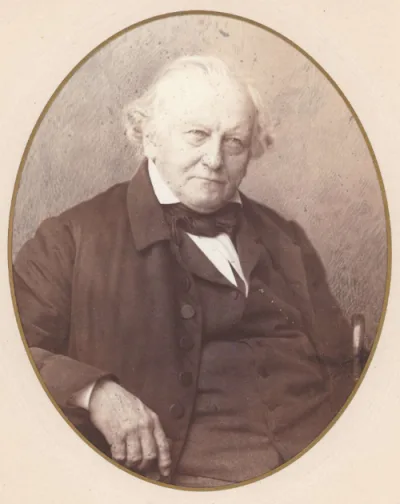
✍️ Author Biography
C. Louis Kervran
📅 1901 – 1983
🌍 French
📚 0 free books
⭐ Known for: Transmutations Biologiques: Métabolismes A...
C. Louis Kervran proposed a discredited theory of 'biological transmutation' where organisms could change elements, notably potassium into calcium.
C. Louis Kervran, a French engineer and scientist, is known for his controversial theory of 'biological transmutation.' Born in 1901 and active during World War II with the French Resistance, Kervran proposed that living organisms could alter one chemical element into another. He based this idea on experiments with chickens, which he believed demonstrated the creation of calcium for eggshells from non-calcium sources in their diet. Kervran suggested this process, which he termed the 'Kervran effect,' occurred through low-energy nuclear reactions facilitated by enzymes. His claims, however, fundamentally contradict established principles of physics, chemistry, and biology, particularly the law of conservation of mass. Mainstream science considers his ideas unsupported and discredited, with studies failing to replicate his findings. Despite scientific rejection, Kervran's theories found some traction in organic farming and macrobiotic circles, influencing methods and diets.
Biological Transmutation Theory
C. Louis Kervran proposed that living organisms could perform nuclear transmutations, a concept he called 'biological transmutation.' He claimed to have observed violations of the law of conservation of mass, suggesting that organisms could transform elements. For instance, he theorized that chickens could convert potassium into calcium to form eggshells, proposing a nuclear fusion reaction. Kervran suggested that biological systems, through mechanisms like enzymes and 'neutral currents,' could facilitate these low-energy transmutations. He posited that physical laws, as understood by mainstream science, did not fully apply to biological reactions. This stance, along with his experimental claims, placed him outside accepted scientific discourse and led to his theories being widely discredited. Attempts to verify his claims under controlled conditions did not yield evidence of transmutation.
Influence and Reception
Despite the lack of scientific validation, Kervran's ideas on biological transmutation were adopted by some organic farming proponents, such as Raoul Lemaire and Jean Boucher, who integrated them into their agricultural methods. Kervran also contributed to publications in this field and his work influenced the macrobiotic diet promoted by George Ohsawa. His book 'Biological Transmutations' was translated and gained some international attention. However, his research was ultimately recognized as 'improbable research,' leading to a parodic Ig Nobel prize in Physics in 1993, with the award noting his 'ardent admirer of alchemy.' Science writer Joe Schwarcz has characterized the Kervran effect as non-existent, stemming from faulty observations.
Key Ideas
- Biological transmutation: the theory that living organisms can change one chemical element into another.
- Kervran effect: a specific instance of biological transmutation, suggesting potassium can form calcium.
- Low-energy transmutation: transmutations occurring at biological temperatures and pressures, possibly facilitated by enzymes.