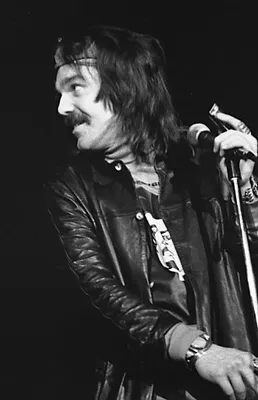
C. J. Van Vliet
Don Van Vliet, known as Captain Beefheart, was a musician and visual artist influential in experimental music and art.
Don Glen Vliet, professionally known as Captain Beefheart, was an American artist, renowned as a singer, songwriter, multi-instrumentalist, and visual artist. Leading a shifting group called the Magic Band, he released 13 studio albums from 1967 to 1982, blending blues, free jazz, rock, and avant-garde styles with unique rhythms, surreal lyrics, and a distinctive vocal delivery. Despite limited commercial success, Beefheart cultivated a dedicated following and influenced numerous experimental and punk artists. He began performing as Captain Beefheart in 1964, and his 1969 album "Trout Mask Replica" is considered a landmark of experimental music. After retiring from music in 1982, he dedicated himself to visual art, with his abstract expressionist paintings and drawings achieving international recognition and significant value.
Born in California in 1941, Vliet displayed early artistic talent, excelling in sculpture from a young age and being recognized as a child prodigy. His parents, however, discouraged his artistic pursuits, leading him to abandon art for a period. His formative years in Lancaster, California, influenced his creative development, exposing him to the blues and jazz music that would shape his sound. He also collaborated with Frank Zappa in his youth. Vliet's formal education was minimal, and he sometimes claimed to have had little schooling, possibly related to dyslexia. He worked various jobs before fully committing to his musical and artistic careers.
Artistic Beginnings and Influences
Don Van Vliet, born Don Glen Vliet, showed exceptional artistic promise from a very young age, beginning to paint and sculpt at three years old. His early work focused on animals, and he was recognized as a child prodigy, even appearing on a Los Angeles television program with his sculptures at age four. He apprenticed with sculptor Agostinho Rodrigues in the 1950s, who also considered him gifted. Vliet claimed to have lectured at the Barnsdall Art Institute at eleven, though this is likely an exaggeration. His parents reportedly discouraged his artistic ambitions, turning down scholarship opportunities that might have led him to study abroad. This parental opposition led Vliet to abandon art for nearly a decade, only returning to it in his mid-twenties. His experiences in Lancaster, California, a town with a growing aerospace industry, profoundly impacted his creative outlook. Musically, he developed a deep appreciation for Delta blues artists like Son House and Robert Johnson, jazz innovators such as Ornette Coleman and John Coltrane, and Chicago blues figures like Howlin' Wolf and Muddy Waters. These diverse influences would later form the bedrock of his unique musical style.
Musical Evolution and The Magic Band
Vliet's musical journey began with early collaborations, including with Frank Zappa, and eventually led to the formation of Captain Beefheart and his Magic Band. After signing with A&M Records, they released early singles that garnered regional attention. Their signing to Buddah Records marked the creation of their seminal album "Safe as Milk" (1967). This work, characterized by blues-rock foundations with experimental deviations, featured unconventional instrumentation and Vliet's distinctive vocals. Collaborations with writer Herb Bermann on lyrics, such as for the song "Electricity," highlighted the band's avant-garde leanings. The album was arranged by Ry Cooder, who joined the band under pressure from Vliet. Drummer John French played a crucial role in translating Vliet's often abstract musical ideas into arrangements for the band. "Safe as Milk" received critical notice, with John Lennon displaying its promotional stickers. Vliet was known for his critical stance towards mainstream music, including The Beatles, and expressed his views through his own work.
Later Career and Visual Art
Captain Beefheart and his Magic Band continued to evolve, releasing influential albums such as "Trout Mask Replica" (1969), which became a touchstone for experimental music. Following this period, Vliet formed a new iteration of the Magic Band, achieving renewed critical acclaim with albums like "Shiny Beast" (1978), "Doc at the Radar Station" (1980), and "Ice Cream for Crow" (1982). In 1982, Vliet retired from music, dedicating himself entirely to visual art. His abstract expressionist paintings and drawings, which often drew inspiration from his lifelong fascination with animals and nature, gained significant recognition. These works have been exhibited internationally in galleries and museums and are highly sought after, commanding considerable prices, marking a successful transition to a second major artistic career.
Key Ideas
- Fusion of diverse musical genres including blues, free jazz, rock, and avant-garde.
- Use of idiosyncratic rhythms and complex musical structures.
- Employing absurdist wordplay and surreal lyrical themes.
- Distinctive vocal delivery characterized by a gravelly tone and wide range.
- Cultivation of an enigmatic persona and challenging artistic control over musicians.
- Transition from influential musician to acclaimed visual artist.
Notable Quotes
“Well, I assure you sir, this thing sucks.”
“strawberry fields, all the winged eels slither on the heels of today's children, strawberry fields forever”
Books by C. J. Van Vliet
0 free public domain books · Read online or download