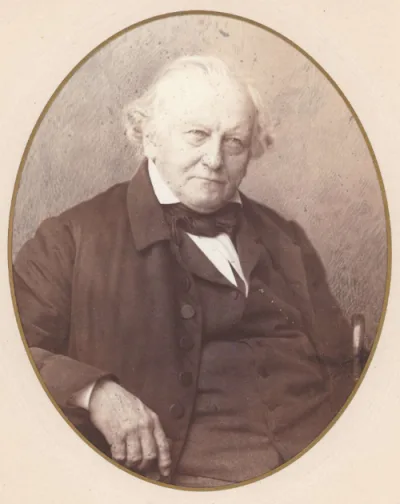
C. B. Tait
Paul Theroux is an acclaimed American novelist and travel writer, known for his vivid narratives and critiques of society.
Paul Theroux, born in 1941, is an American novelist and travel writer recognized for his extensive body of work, including the notable travelogue "The Great Railway Bazaar." His career began after joining the Peace Corps, where his involvement in assisting a political opponent led to his expulsion from Malawi and the Peace Corps. This experience, along with subsequent travels and observations, has deeply informed his writing.
Theroux's literary output spans numerous novels and travel books, often characterized by rich descriptions, a sharp wit, and a critical perspective on social and political issues. Several of his fictional works have been adapted into films and television series. He has also engaged in critical analyses of prominent figures, such as V. S. Naipaul, reflecting a complex personal and professional relationship. Theroux's personal life has seen him live in various countries, including Malawi, Uganda, Singapore, and England, before returning to the United States. He is the father of authors and filmmakers Marcel and Louis Theroux.
Early Life and Peace Corps Service
Born in Medford, Massachusetts, Paul Theroux was raised by Catholic parents of Italian-American and French-Canadian descent. His early education included Medford High School and universities in Maine and Massachusetts, where he earned a degree in English. Following his studies, Theroux joined the Peace Corps in 1963, teaching in Malawi. Describing himself as a restless young man, he became involved in assisting a political opponent of Prime Minister Hastings Banda, which resulted in his expulsion from Malawi and the Peace Corps in 1965. This event and his subsequent declaration as persona non grata in Malawi influenced his later novel "Jungle Lovers."
Travels and Literary Development
After his departure from Malawi, Theroux moved to Uganda to teach English at Makerere University, where he developed friendships with literary figures like V.S. Naipaul. A threatening incident involving an angry mob prompted his family's departure from Africa. They relocated to Singapore and later settled in England. His seminal work, "The Great Railway Bazaar," chronicling a train journey from Britain to Japan, marked a significant success in his travel writing career. He has since penned numerous travel books exploring diverse regions, noted for their detailed observations and ironic tone. His nonfiction also includes "Sir Vidia's Shadow," a memoir detailing his complex relationship with V.S. Naipaul.
Themes and Social Commentary
Theroux's writing frequently engages with social and political commentary, often through a lens of sharp observation and irony. His novel "The Mosquito Coast" gained significant attention through film and television adaptations. "Saint Jack" faced a ban in Singapore for its portrayal of the country. He has also voiced criticism of celebrity activism, questioning the impact and motivations of public figures involved in humanitarian causes. Theroux himself has described a shift in his disposition, becoming more optimistic and recognizing the need for happiness to fuel his writing.
Key Ideas
- Critique of celebrity activism and foreign interventionism
- Exploration of cultural differences and personal experiences in travel
- Complexities of long-term friendships and intellectual relationships
Notable Quotes
“angry and agitated young man”
“mythomaniacs, people who wish to convince the world of their worth”
“the impression that Africa is fatally troubled and can be saved only by outside help—not to mention celebrities and charity concerts—is a destructive and misleading conceit”
“the disposition of a hobbit”
“need happiness to write well”
Books by C. B. Tait
0 free public domain books · Read online or download