Burgess, Gelett
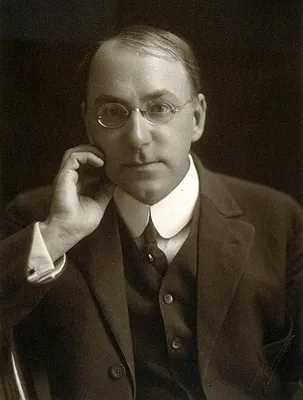
Gelett Burgess was an artist, writer, and humorist known for nonsense verse and introducing French modern art to the US.
Frank Gelett Burgess (1866–1951) was an American artist, poet, author, and humorist who played a significant role in the San Francisco literary scene of the 1890s. He co-founded the influential little magazine, The Lark, which became known for its whimsical content, including his famous nonsense poem "The Purple Cow." Burgess is also recognized for his role in bringing French modern art to American attention through his essay "The Wild Men of Paris." He also authored the popular "Goops" children's books and coined the term "blurb."
Burgess's early life saw him move from conservative Boston to the more bohemian atmosphere of San Francisco, where he worked as a draftsman and later an instructor at the University of California, Berkeley. His tenure at Berkeley ended due to his involvement in an incident where a statue of Henry Cogswell was toppled. This event, however, led him to further explore his literary and artistic pursuits, culminating in the founding of The Lark. His career also included work in New York and extensive travel in France. Burgess was married to writer Estelle Loomis, and they had no children. He passed away in Carmel-by-the-Sea, California.
Literary and Artistic Contributions
Gelett Burgess was a multifaceted creative figure, widely recognized for his contributions to literature and art. He was a key participant in the San Francisco literary renaissance of the 1890s, most notably through his publication, The Lark. This iconoclastic little magazine featured his famous nonsense verse, exemplified by "The Purple Cow," which became a touchstone of the genre. Burgess also played a crucial role in introducing American audiences to avant-garde European art, particularly through his essay "The Wild Men of Paris." This work brought attention to movements like Cubism and featured reproductions of significant artworks, including Picasso's "Les Demoiselles d'Avignon." His creative output extended to children's literature with the "Goops" series, and he is credited with coining the term "blurb" for promotional book descriptions.
The Lark and Bohemian Circles
Following his departure from the University of California, Berkeley, due to an incident involving a public fountain, Burgess co-founded The Lark in 1895. This humorous periodical, intended to be a "merry adventure," gained unexpected popularity, reaching a circulation of over 3,000. The first issue prominently featured "The Purple Cow," a poem that would become synonymous with Burgess's nonsensical style. Burgess often used pseudonyms within the magazine, contributing to its eclectic and playful character. The magazine attracted a diverse group of artists and writers, who congregated at the Montgomery Block building and became known as "Les Jeunes." Despite its success, Burgess eventually grew weary of "The Purple Cow," even publishing a "Confession" about it. The Lark spawned various spin-offs, including "Le Petit Journal des Refusées," printed on wallpaper.
Introduction of Modern Art to the US
Burgess made a significant contribution to the American art world by being one of the first to introduce and discuss French modern art. In his 1910 essay, "The Wild Men of Paris," he provided an overview of the burgeoning avant-garde art scene in France, just prior to the famous "Cubism" exhibition that captured public attention. The article was informed by his observations at the Salon des Indépendants and included interviews with prominent artists such as Henri Matisse, Pablo Picasso, and Georges Braque. Burgess's essay featured the first American reproduction of Picasso's seminal work, "Les Demoiselles d'Avignon." While partly humorous in tone, the article was a serious effort to familiarize the American public with these new artistic movements and their key figures.
Key Ideas
- Coined the term 'blurb' for promotional book descriptions.
- Pioneered introduction of French modern art to the United States.
Notable Quotes
“The Purple Cow: Reflections on a Mythic Beast Who's Quite Remarkable, at Least”
“Confession: and a Portrait Too, Upon a Background that I Rue”
“The Wild Men of Paris”
“a flamboyant advertisement; an inspired testimonial”
Books by Burgess, Gelett
0 free public domain books · Read online or download