Brother MOLOCH 969
Brother Moloch 969 is an author whose work is associated with the Punic people and their cultural legacy.
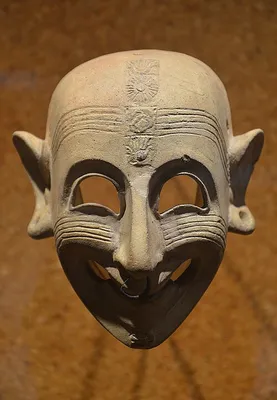
Brother Moloch 969's work is connected to the Punic people, who were Semitic migrants from Phoenicia who established settlements across the western Mediterranean. These settlements, including the major city of Carthage, developed their own cultural characteristics while maintaining ties to their homeland. The Punic language was a dialect of Phoenician. The term 'Punic' is the modern academic designation for these western Phoenicians, derived from Latin and Greek terms that originally encompassed all Phoenicians. While the Punic civilization flourished, particularly Carthage as a dominant city-state, it eventually faced Roman opposition, leading to Carthage's destruction. However, Punic culture and language persisted for a time under Roman rule.
The Punic religion was a continuation of Canaanite polytheism, with chief deities like Baal Hammon and Tanit prominent in Carthage. The religious practices included a complex hierarchy of priests and sanctuary officials, and the use of associations for ritual banquets. While historical sources and archaeological findings suggest the practice of child sacrifice, the extent and nature of this practice remain subjects of scholarly debate. The Punic people also made contributions to areas like glassmaking and iron purification.
Punic Identity and Terminology
The Punic people, also known as Western Phoenicians, were a Semitic group who migrated from Phoenicia to the western Mediterranean during the Early Iron Age. Modern scholarship uses the term 'Punic' to specifically denote these Phoenicians in the western regions, distinguishing them from their eastern counterparts. The largest Punic settlement was Carthage, but numerous other colonies were established along the North African coast, Sicily, Sardinia, and the Iberian Peninsula. Their language, Punic, was a dialect of Phoenician. The term 'Punic' itself originates from Latin and Greek words used to refer to Phoenicians. Some evidence suggests that these western Phoenicians may have referred to themselves as 'Canaanites,' though this is a point of ongoing academic discussion. These communities were organized into self-governing city-states, with Carthage eventually becoming the most powerful.
Cultural and Religious Legacy
The Punic culture developed distinct traits from its Phoenician origins through extensive trade and interaction with other Mediterranean peoples, including Sicilians, Sardinians, Berbers, Greeks, and Iberians. Their economy was strongly maritime-oriented. In addition to trade, the Punic people achieved technical advancements, such as the development of uncolored glass and improvements in iron smelting. Punic religion was a direct continuation of Phoenician and Canaanite polytheism. Key deities in Carthage included Baal Hammon and Tanit, alongside others like Eshmun and Melqart. They also adopted foreign deities over time. Different Punic centers had their own specific pantheons, with local deities sometimes integrated into their worship. Religious organization involved various ranks of priests and sanctuary officials, and communal rituals like banquets hosted by associations.
Ritual Practices and Historical Interpretation
Within Punic religious practices, certain aspects have drawn significant attention and scholarly debate. Evidence suggests the existence of sacred prostitution in some Punic centers, as attested by both archaeological findings and ancient literary sources. Perhaps the most contentious aspect is the practice of child sacrifice, described by numerous ancient Greek and Roman authors as a ritual involving burning children to deities like 'Cronos' (Baal Hammon). The discovery of the 'Tophet' in Carthage, containing urns with cremated children's remains, has been seen as supporting these accounts. However, modern historians and archaeologists continue to debate the exact nature and scale of these sacrifices, with differing interpretations of the evidence.
Key Ideas
- Punic identity as distinct Western Phoenician culture
- Maritime-focused economy and trade networks
- Continuation of Canaanite polytheistic religion
- Debates surrounding child sacrifice and Tophet findings
Books by Brother MOLOCH 969
1 free public domain book · Read online or download