Bertha Selmon
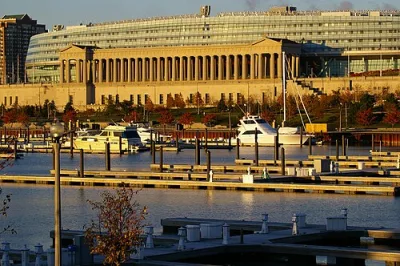
Soldier Field, opened in 1924, hosted diverse events including sports, military pageants, and civic celebrations, with early years featuring unique dedications.
Soldier Field, inaugurated in 1924, has a long history of hosting a wide array of events beyond its primary role as the home of the Chicago Bears. Its opening year alone saw a variety of dedicatory ceremonies and competitions, highlighting its initial purpose as a multi-use public venue.
The stadium's early years were marked by significant events such as athletic meets, civic celebrations like "Chicago Day" commemorating the Great Chicago Fire, and even a state amateur horseshoe pitching tournament. Military pageants, featuring aerial displays and reenactments, were also prominent, drawing large crowds and showcasing technological advancements of the era. The venue also hosted various sporting events, from high school and college football games to professional rodeos and track and field championships, attracting notable athletes and significant attendance.
Over its history, Soldier Field has been a site for annual events including the Special Olympics and various festivals, alongside former events like the Chicagoland Music Festival and motorsports competitions. The stadium's existence for over a century underscores its enduring significance as a Chicago landmark, adapting to host both traditional and contemporary gatherings.
Inaugural Events and Civic Dedications
Soldier Field commenced its existence in 1924 with a series of events designed to dedicate and establish its presence within the city. The initial activities included athletic competitions for the Police Athletic Games and a fundraiser for the Chicago Police Benevolent Association, featuring a parade, fireworks, and musical performances. A "Pageant of Music and Light" further served as a dedicatory event. Notably, "Chicago Day" on October 9th marked the stadium's formal opening with a large crowd, featuring military displays, equestrian performances, and a dramatic reenactment of the Great Chicago Fire, complete with historical firemen and early fire-fighting equipment. The event also included police drills and a polo match. The stadium's name officially changed from "Grant Park Stadium" to "Soldier Field" on Armistice Day, November 11, 1924, with commemorative ceremonies honoring war veterans and featuring prominent figures.
Sporting and Spectacle in the Early Years
The early years of Soldier Field were characterized by a diverse range of sporting events and large-scale spectacles. In 1924, it hosted its first high school football game, followed by significant college football matchups, including a game between Notre Dame and Northwestern that drew 45,000 spectators and was later recalled as a career highlight by Northwestern player Ralph "Moon" Baker. The stadium also saw a state amateur horseshoe pitching tournament and the Midwest Catholic League championship football game. The following year, 1925, brought the Loyola Relays, featuring Olympic athletes Paavo Nurmi and Ville Ritola, and the "first annual Chicago Olympics," an athletics event with notable Olympic competitors. Military pageants, such as a reenactment of the Battle of the Argonne, were major attractions, involving aerial maneuvers and ground combat simulations, though sometimes resulting in injuries. Professional rodeo also found a home at Soldier Field with the Chicago Roundup, attracting substantial crowds.
Annual Traditions and Evolving Use
Beyond its initial dedications, Soldier Field quickly established itself as a venue for recurring events and adapted to various forms of entertainment and civic engagement. Annual traditions like German Day, which began in 1925 and continued until 1937, regularly drew over 40,000 attendees for athletic events, soccer matches, and cultural performances. The stadium also hosted the Chicago College All-Star Game and the Chicago Prep Bowl football games for many years. Ringling Bros. and Barnum & Bailey Circus performances were held in the stadium's parking lot across several periods. More recently, it has been the site for the Special Olympics Chicago since 1968, with a brief interruption, and has hosted music festivals like the Spring Awakening Music Festival. The stadium's capacity for diverse events, from major sporting contests to community gatherings and entertainment, has been a constant throughout its existence.
Books by Bertha Selmon
2 free public domain books · Read online or download