Bernard Quaritch (Firm).
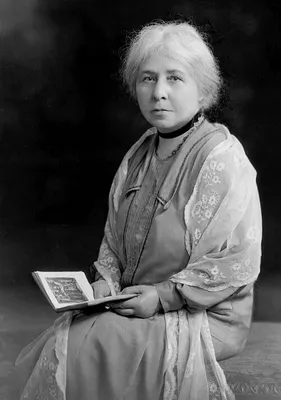
Margaret Alice Murray was a pioneering Egyptologist and folklorist whose theories on witchcraft significantly influenced Wicca.
Margaret Alice Murray was a notable British scholar born in India in 1863. She had a long and varied career, initially as a nurse and social worker before turning to Egyptology. She became the first woman appointed as a lecturer in archaeology in the UK, teaching at University College London (UCL) for many years. Her archaeological work in Egypt, including the discovery of the Osireion temple, established her reputation.
Beyond Egyptology, Murray became deeply involved in folklore studies and developed a controversial theory about a surviving pre-Christian pagan religion linked to witch trials. While this "witch-cult hypothesis" was later academically discredited, it had a profound impact on the development of Wicca. Murray's extensive publications and lectures continued until her death in 1963, earning her recognition as "The Grand Old Woman of Egyptology" and the "Grandmother of Wicca."
Early Life and Academic Beginnings
Born in Calcutta in 1863, Margaret Alice Murray spent her youth divided between India, Britain, and Germany, receiving training in nursing and social work. Her formal education was unconventional, with her later stating she never took an exam before university. A pivotal moment came in 1893 when her sister alerted her to classes in Egyptian hieroglyphs taught by Flinders Petrie. This led Murray to enroll at University College London (UCL) in 1894, studying Egyptology. She quickly became involved with Petrie, assisting him and publishing her first research paper. In 1898, she was appointed a junior lecturer at UCL, becoming the first woman to hold such a position in archaeology in the United Kingdom. She also supplemented her income with public lectures at institutions like the British Museum.
Egyptological Fieldwork and Public Engagement
Murray's early career in Egyptology was marked by her participation in Flinders Petrie's excavations in Abydos, Egypt, during the 1902–1903 season. There, she was instrumental in discovering the Osireion temple. The following season, she investigated the Saqqara cemetery, solidifying her academic standing. To supplement her university salary, she delivered public classes and lectures. Notably, in 1908 at the Manchester Museum, she publicly unwrapped the mummy of Khnum-nakht, a significant event as it was the first time a woman had performed such a public demonstration. Recognizing the public's fascination with Ancient Egypt, Murray authored several books aimed at a general audience, capitalizing on the era's "Egyptomania."
Witch-Cult Hypothesis and Folklore Influence
Unable to travel to Egypt due to World War I, Murray shifted her research focus. She became deeply interested in the "witch-cult hypothesis," proposing that the witch trials of the Early Modern period were an attempt to suppress a surviving pre-Christian pagan religion centered around a Horned God. Although this theory has since been academically refuted and her methods criticized, it gained considerable public attention and significantly influenced the burgeoning Wicca movement, leading to her being called the "Grandmother of Wicca." During this period, she also conducted excavations on prehistoric sites in Malta and Menorca, further developing her interests in folkloristics.
Later Career and Legacy
Murray continued her academic work, undertaking excavations in the British Mandate of Palestine and leading a small excavation in Petra, Jordan, in her later years. She served as president of the Folklore Society and lectured at prominent institutions. She received an honorary doctorate in 1927 and was appointed assistant professor at UCL in 1928, retiring in 1935. Despite her acclaim as "The Grand Old Woman of Egyptology," her contributions in that field were later somewhat overshadowed by those of Petrie. Conversely, her work in witchcraft history, though discredited, left a lasting impact on religious and literary spheres, particularly on Wicca. She continued publishing until her death in 1963 at the remarkable age of 100.
Key Ideas
- Witch-cult hypothesis: The theory that historical witch trials were part of an effort to eradicate a surviving pagan religion dedicated to a Horned God.
- Influence on Wicca: Her witch-cult hypothesis significantly impacted the formation and beliefs of the Wicca religious movement.
Books by Bernard Quaritch (Firm).
0 free public domain books · Read online or download