Bernard Bangley
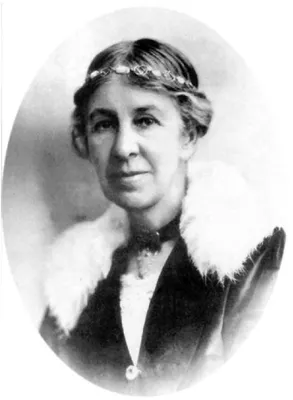
Evelyn Underhill was an English Anglo-Catholic writer and pacifist, renowned for her extensive works on Christian mysticism.
Evelyn Underhill, born in 1875, was an English writer and pacifist who became a significant figure in the study of Christian mysticism. Her early life was marked by profound mystical experiences, which she dedicated her life to exploring through research and writing. Despite her husband and parents not sharing her spiritual interests, she pursued her intellectual and religious journey, initially an agnostic before gravitating towards Neoplatonism and eventually becoming an Anglo-Catholic.
Underhill's career spanned poetry, novels, and extensive theological works. Her most famous book, "Mysticism," published in 1911, offered a practical and experiential approach to spiritual consciousness, diverging from purely theoretical or academic analyses. She also explored the intersection of the physical and spiritual in her novels, using narrative to illustrate human drama within a sacramental framework. Her later life saw her become a prominent lay leader in the Anglican Church, conducting retreats, lecturing, and advocating for contemplative prayer, focusing on the Holy Spirit after the death of her spiritual mentor, Baron Friedrich von Hügel.
Early Life and Spiritual Quest
Born in 1875, Evelyn Underhill's early life was characterized by profound, "abrupt experiences" of a unified reality, which she termed the "still desert" of the mystic. These early insights sparked a lifelong quest for understanding, driving her research and writing. Although an only child devoted to her parents and later her husband, Hubert Stuart Moore, an English barrister, she navigated her spiritual path independently. Her husband and parents did not share her deep interest in spiritual matters. Underhill's journey led her from initial agnosticism through Neoplatonism to a strong commitment to Anglo-Catholicism. Her travels in Europe, particularly to France, Italy, and Switzerland, involved visiting religious sites and pursuing interests in art and Catholicism.
Literary and Theological Contributions
Underhill authored over thirty books, publishing under her maiden name or the pseudonym "John Cordelier." Her literary output included satirical poetry, such as "The Bar-Lamb's Ballad Book," and three novels – "The Grey World" (1904), "The Lost Word" (1907), and "The Column of Dust" (1909). These novels explored the sacramental connection between the physical and spiritual realms, illustrating human experiences through a spiritual lens. Her seminal work, "Mysticism," published in 1911, presented mysticism as a practical, spiritual activity centered on love, rather than a purely theoretical or academic pursuit, and diverged from William James's classifications of mystical states.
Later Life and Spiritual Leadership
Underhill's spiritual development was significantly influenced by Baron Friedrich von Hügel, her mentor from 1921 to 1924. Von Hügel encouraged a more Christocentric perspective in her work. After his death, her writings increasingly focused on the Holy Spirit. She became a respected lay leader within the Anglican Church, actively engaging in spiritual direction, leading retreats, and lecturing on radio. Her work aimed to integrate spiritual experience with everyday life, advocating for active engagement with the world rather than withdrawal, a concept she explored in her novels as an alternative to "fuga in solitudinem" (flight into solitude).
Key Ideas
- Mysticism as a practical, experiential spiritual activity centered on love.
- The sacramental intersection of the physical and spiritual in human life.
- The integration of spiritual insights with active engagement in the world.
Notable Quotes
“abrupt experiences of the peaceful, undifferentiated plane of reality—like the 'still desert' of the mystic—in which there was no multiplicity nor need of explanation”
“the most wonderful personality. ... so saintly, truthful, sane and tolerant”
“the temptation of fuga in solitudinem ("the flight into solitude")”
Books by Bernard Bangley
2 free public domain books · Read online or download