Bergson, Henri
Henri Bergson was a French philosopher known for valuing intuition over rationalism and for his influential works on time, consciousness, and evolution.
Henri Bergson, a prominent French philosopher of the early 20th century, significantly impacted both analytic and continental philosophical traditions. He is best recognized for championing the importance of immediate experience and intuition as superior means of understanding reality, contrasting this with abstract rationalism and scientific methods. His philosophical contributions earned him the 1927 Nobel Prize in Literature and France's Grand-Croix de la Legion d'honneur. Bergson's popularity, however, also sparked debate in France, as his ideas were perceived by some as being at odds with the prevailing secular and scientific orientation of the Republic.
Bergson's academic career was marked by his professorships at the Collège de France, where he held the Chair of Greek and Roman Philosophy and later Modern Philosophy. His life was characterized by a quiet dedication to his work, producing four principal books that explored consciousness, perception, memory, evolution, and the origins of morality and religion. He was born in Paris to a family of Polish-Jewish and English-Jewish descent and received an early education in both Jewish traditions and later in secular French schooling, eventually losing his religious faith.
Philosophical Contributions
Bergson's philosophy emphasizes the primacy of intuition and immediate experience in grasping the nature of reality, positing that these are more profound than the analytical approaches of science and abstract reason. He explored concepts of time, consciousness, and the vital impulse of evolution. His work, particularly "Creative Evolution," challenged mechanistic views by proposing a dynamic, life-affirming force driving development. Bergson's ideas on duration, which posits time as a continuous flow of subjective experience rather than a series of discrete moments, were groundbreaking. His emphasis on the qualitative and the lived experience offered a counterpoint to the quantitative and objective perspectives often favored in scientific discourse.
Major Works and Academic Career
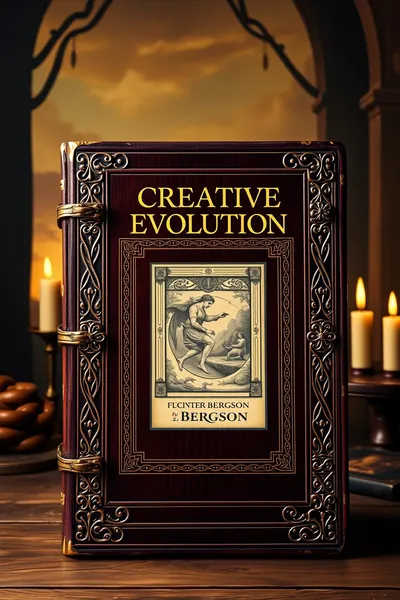
Throughout his career, Bergson published four major works: "Time and Free Will" (1889), "Matter and Memory" (1896), "Creative Evolution" (1907), and "The Two Sources of Morality and Religion" (1932). These books established his reputation and influenced philosophical thought significantly. He held prestigious academic positions, including the Chair of Greek and Roman Philosophy and later the Chair of Modern Philosophy at the Collège de France, where his public lectures drew large audiences. His academic journey began after receiving degrees from the École Normale Supérieure and the University of Paris, followed by teaching appointments at various lycées before ascending to higher academic posts. His early work included a dissertation on immediate consciousness and a study of Lucretius.
Personal Background and Influences
Born in Paris in 1859, Henri Bergson came from a family with Polish-Jewish and English-Jewish heritage. His father was a composer, and his maternal great-grandmother was a noted benefactor in Polish Jewry. Bergson spent some early years in London, gaining familiarity with English. He lost his religious faith during his adolescence, a period coinciding with his engagement with evolutionary theory. He married Louise Neuberger, a cousin of Marcel Proust, and they had a daughter. Bergson's sister, Mina, married Samuel Liddell MacGregor Mathers, a founder of the Hermetic Order of the Golden Dawn, connecting him indirectly to occult circles. His education included studies at the Lycée Condorcet and the École Normale Supérieure, where he encountered thinkers like Herbert Spencer.
Key Ideas
- Primacy of intuition and immediate experience over abstract rationalism
- Concept of duration as continuous subjective time
- Creative evolution as a vital impulse driving development
- Distinction between static and dynamic aspects of consciousness and society
Books by Bergson, Henri
0 free public domain books · Read online or download