Barnett, Ada
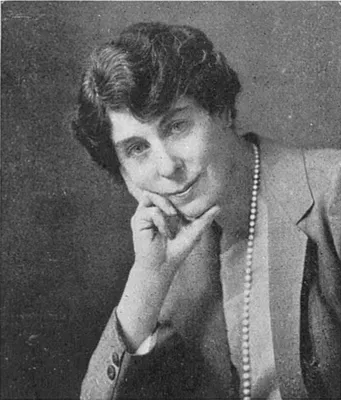
British novelist Ada Barnett (1864-1953) wrote under her own name and G. Cardella, exploring themes of existence in her fiction.
Ada Barnett, born in 1864, was a British novelist who utilized both her given name and the pseudonym G. Cardella for her published works. She was one of nine children and spent her early years at Kenton Court in Sunbury-on-Thames. Though she never married, she wore a ring to honor a deceased fiancé. Barnett's literary career began in the 1890s with four novels published as G. Cardella. Later, in the 1920s, she released three more novels under her own name. One of her notable works, 'The Joyous Adventurer,' is a fantasy narrative about a celestial being's exploration of humanity. Beyond her writing, Barnett was an advocate against vivisection and was recognized for her service during World War I, being named a Member of the Order of the British Empire in 1919 for her role as commandant at two auxiliary hospitals. She passed away in 1953 in Sunbury-on-Thames.
Literary Career and Pseudonymity
Ada Barnett pursued a writing career that spanned several decades, beginning in the 1890s. During this initial period, she published four novels under the pen name G. Cardella. Later, in the 1920s, she shifted to using her own name, Ada Barnett, for her subsequent literary output, releasing three more novels. This dual approach to publishing suggests a potential exploration of different authorial voices or perhaps a strategic choice for her varied narratives. Her works, whether under her own name or her pseudonym, contributed to the literary landscape of her time.
Thematic Exploration in Fiction
Barnett's novel 'The Joyous Adventurer' offers a glimpse into her imaginative scope, presenting a fantasy narrative centered on a being named Copper Top. This character's journey involves experiencing human existence before returning to a higher plane. This theme of exploration and the contrast between earthly and elevated states of being hints at philosophical or metaphysical interests within her fiction. While the source does not detail other thematic elements across her bibliography, this particular work suggests an engagement with concepts of consciousness and existence beyond the ordinary.
Public Service and Advocacy
Beyond her literary endeavors, Ada Barnett was actively involved in social causes and public service. She was a proponent of the anti-vivisection movement, indicating a commitment to animal welfare. Her contributions during World War I were also significant; she served as a commandant for the Kingswood Auxiliary Hospital and Rust Hall Auxiliary Hospital. For this service, she was recognized in 1919 as a Member of the Order of the British Empire. Her life thus encompassed both creative expression and dedicated civic engagement.
Books by Barnett, Ada
0 free public domain books · Read online or download