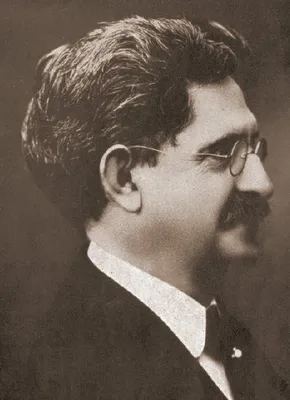
B.O. Flower (ed.)
B.O. Flower was a muckraking journalist and editor of The Arena, advocating for social reform and human perfectibility.
Benjamin Orange Flower, known as B.O. Flower, was an American journalist active during the Progressive Era, primarily recognized for his role as the editor of the influential magazine, The Arena. Born in Illinois in 1858, Flower initially pursued religious studies but later shifted his focus to journalism and social reform. He launched The Arena in 1889, using it as a platform to advocate for a wide range of progressive causes, including public morality, social improvement, and direct democracy. The magazine featured diverse viewpoints, united by Flower's belief in humanity's perfectibility through enlightenment and reasoned action.
Flower's editorial stance supported initiatives like kindergartens, libraries, and improved housing, while criticizing materialism and economic inequality. He championed causes such as prison reform, the prohibition of alcohol, women's suffrage, and reform of divorce laws. Politically, he was a proponent of free silver and strongly supported William Jennings Bryan in the 1896 election. Despite not identifying as a socialist, Flower advocated for a "neo-Christianity" focused on personal character and the rejection of greed. He also defended Christian Science, publishing a defense of its practices in 1910, though he was not a follower himself. Flower passed away in 1918.
The Arena and Social Reform
As the editor of The Arena from 1889 to 1909, B.O. Flower established a significant platform for social reform and progressive ideas. He envisioned a "League of Love" or "Federation of Justice" to unite like-minded individuals, which contributed to the formation of the Union for Practical Progress. The magazine itself was a diverse publication, welcoming perspectives from populists, anarchists, socialists, and advocates of the Single Tax. Flower's core philosophy centered on an evolutionary approach to social change, believing in humanity's capacity for improvement through education and rational problem-solving. He advocated for public institutions like kindergartens and libraries, and criticized excessive materialism and wealth concentration. The Arena consistently promoted direct democracy mechanisms, prison reform, abolition of capital punishment, and temperance, while also addressing issues of women's rights, poverty, crime, and race relations.
Political and Philosophical Stance
B.O. Flower's political philosophy was rooted in a belief in direct democracy as a means to enhance freedom and opportunity. While he did not consider himself a socialist, viewing socialist ideals as utopian and revolutionary change as destructive, he advocated for a "neo-Christianity." This involved emphasizing personal character and rejecting avarice and inequality, which he saw propagated by wealthy elites and their political allies. Flower believed social problems required direct confrontation and rational solutions, drawing on a wide spectrum of opinions. He identified monopolies and the influence of moneyed interests, particularly those promoting alcohol, as obstacles to moral and societal progress. His support for William Jennings Bryan in the 1896 presidential election underscored his commitment to combating what he perceived as encroaching plutocracy.
Defense of Christian Science
In the early 1900s, B.O. Flower became a notable defender of the Christian Science movement, which was facing significant criticism. Flower asserted that Christian Scientists were subjected to a "persistent campaign of falsehood, slander and calumny." Driven by a belief in "fair play," he published "Christian Science As a Religious Belief and a Therapeutic Agent" in 1910, despite not being a member of the faith himself. While initially skeptical, Flower was influenced by anecdotal accounts of healing through Christian Science that medical professionals could not explain. This led him to lend his support to the growing movement, recognizing its potential impact, even if he did not personally adhere to its doctrines.
Key Ideas
- Human perfectibility through enlightenment and reasoned action
- Evolutionary social change rather than revolution
- Neo-Christianity emphasizing personal character and rejection of greed
- Direct democracy for increased freedom and opportunity
- Critique of materialism and wealth monopolization
Notable Quotes
“persistent campaign of falsehood, slander and calumny”
“fair play and all things that make for a nobler and purer life”
Books by B.O. Flower (ed.)
0 free public domain books · Read online or download