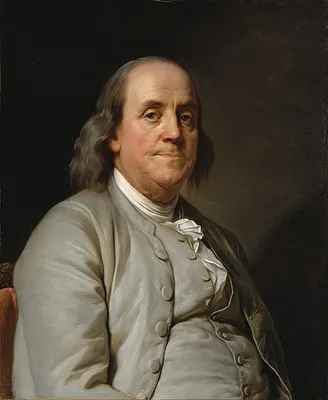
A Brief Introduction for Inquiring Minds by David Edwin Hill
Benjamin Franklin was a polymath, a Founding Father, inventor, and diplomat who championed colonial unity and Enlightenment ideals.
Benjamin Franklin was a prominent American figure, recognized as a writer, scientist, inventor, statesman, and diplomat. He played a crucial role in the formation of the United States, contributing to the Declaration of Independence and serving as its first postmaster general. Franklin established himself as a successful printer and publisher in Philadelphia, notably with The Pennsylvania Gazette and Poor Richard's Almanack. His intellectual pursuits extended to science, where his work on electricity was significant, and he was responsible for numerous inventions, including the lightning rod and bifocals. He was also a key organizer of civic institutions, founding organizations like the Library Company of Philadelphia and contributing to the establishment of the University of Pennsylvania. Franklin's dedication to colonial unity earned him the title 'The First American,' and his diplomatic efforts were vital in securing French support during the American Revolution. His legacy encompasses scientific achievement, political leadership, and a profound influence on American society.
Early Life and Intellectual Development
Born in Boston, Benjamin Franklin's early education was limited due to his family's financial constraints, though he pursued knowledge through extensive reading. Apprenticed to his printer brother, he quickly demonstrated a talent for writing and advocacy, famously using the pseudonym 'Silence Dogood' to publish letters in his brother's newspaper. This early experience fostered his commitment to free speech. Franklin's journey led him to Philadelphia, where he eventually established his own printing business and published The Pennsylvania Gazette. His intellectual curiosity and desire for self-improvement led him to form the Junto in 1727, a discussion group for tradesmen and artisans that aimed to foster community betterment and intellectual exchange. This group served as a precursor to many civic organizations he would later found.
Civic Engagement and Philosophical Pursuits
Franklin's involvement in community affairs was extensive. The Junto's discussions highlighted the scarcity of books, prompting Franklin to conceive of a subscription library, which led to the founding of the Library Company of Philadelphia in 1731. This initiative demonstrated his practical approach to disseminating knowledge and fostering an informed citizenry. He was also instrumental in establishing the Academy and College of Philadelphia, which later became the University of Pennsylvania, and served as the first secretary and later president of the American Philosophical Society. These endeavors underscore his commitment to education, scientific inquiry, and the advancement of Enlightenment ideals within the colonies.
Scientific Contributions and Inventions
Beyond his political and civic achievements, Benjamin Franklin was a significant figure in the scientific realm, particularly in the study of electricity. His experiments and theories established him as a major intellectual force during the American Enlightenment and in the history of physics. He also meticulously charted the Gulf Stream. Franklin's practical genius is evident in his numerous inventions, which aimed to improve daily life and safety. Among his most notable creations are the lightning rod, designed to protect structures from electrical storms, bifocal lenses for eyeglasses, and the efficient Franklin stove. These inventions reflect his keen observation and his desire to apply scientific understanding for practical benefit.
Statesmanship and Abolitionist Stance
Franklin's career as a statesman and diplomat was marked by significant achievements. He was a key figure in advocating for colonial unity, earning him the moniker 'The First American.' As a diplomat, he was instrumental in securing French support for the American Revolution and served as the first U.S. ambassador to France. His political acumen was further demonstrated by his roles in drafting and signing the Declaration of Independence, the Treaty of Paris, and the U.S. Constitution. Notably, Franklin's views on slavery evolved over time; after initially owning enslaved individuals, he became a vocal abolitionist, advocating for the education and integration of African Americans into society.
Key Ideas
- Colonial unity and self-governance
- Importance of free speech and press
- Practical application of scientific knowledge
- Civic improvement through organized institutions
- Advocacy for abolition of slavery
Notable Quotes
“Eripuit fulmen cœlo, mox sceptra tyrannis”
Books by A Brief Introduction for Inquiring Minds by David Edwin Hill
1139 free public domain books · Read online or download
























![A LITTLE HISTORY - [ Truth about ] THE SHEPHERDING MOVEMENT](/img/thumb/a-little-history-truth-about-the-shepherding-movement-allan-clare-bill-hamon-ern-baxter-charles-simpson-derek-prince-don-basham-bob-mumford-john-bevere-r-c-sproul-bredesen-juan-carlos-ortiz-bruce-metz.webp)