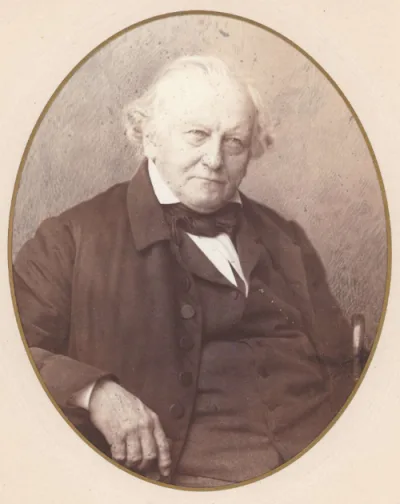
Austria) Panel on the Biological Effects of Transmutation and Decay of Incorporated Radioisotopes (1967 Vienna
The Manhattan Project developed the first atomic weapons during World War II, involving extensive scientific research and industrial production.
The Manhattan Project was a World War II initiative led by the United States, with support from the UK and Canada, to create the first nuclear weapons. This massive undertaking employed around 130,000 people and cost billions of dollars. Directed by Major General Leslie Groves and with J. Robert Oppenheimer leading the Los Alamos Laboratory, the project focused on producing fissile materials like enriched uranium and plutonium. These materials were used in the development of the "Little Boy" and "Fat Man" bombs, which were ultimately deployed in August 1945. The project also involved intelligence gathering on German nuclear efforts and laid groundwork for postwar nuclear research and the U.S. Atomic Energy Commission.
Origins and Early Research
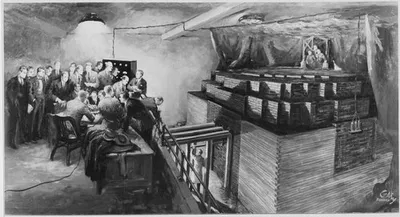
The theoretical possibility of an atomic bomb emerged following the discovery of nuclear fission in 1938. Concerns about Germany developing such a weapon prompted scientists like Leo Szilard and Eugene Wigner to alert President Roosevelt through the Einstein-Szilard letter in 1939. This led to the formation of the Advisory Committee on Uranium, which confirmed the potential destructiveness of uranium-based bombs. Early research, including experiments with graphite and nuclear fission reactions, took place at Columbia University. However, the pace of research was considered too slow by some scientists, leading to the integration of the uranium research efforts into larger governmental bodies like the National Defense Research Committee and later the Office of Scientific Research and Development (OSRD).
British Contributions and Project Acceleration
In parallel, British scientists like Frisch and Peierls made significant breakthroughs regarding the critical mass of uranium-235, indicating that a bomb was feasible. Their findings initiated the British atomic bomb project and the MAUD Committee, which recommended pursuing development. Britain shared its research with the US, and an Australian physicist, Mark Oliphant, played a crucial role in ensuring this information reached key American scientists, including Ernest O. Lawrence. This exchange, combined with the escalating war, prompted President Roosevelt to accelerate the atomic program in October 1941, establishing a Top Policy Group and assigning the Army to manage the project due to its experience with large-scale construction.
Industrial Scale Production and Weapon Design
By December 1941, following the attack on Pearl Harbor, the S-1 Committee was formed to coordinate research into various isotope separation techniques, including electromagnetic separation, gaseous diffusion, and thermal diffusion, as well as gas centrifuges. Simultaneously, research into nuclear reactor technology, using heavy water or graphite moderators, was underway at institutions like the University of Chicago. The committee recommended pursuing all these technologies concurrently. The majority of the project's cost was dedicated to building and operating plants for fissile material production, with enriched uranium produced in Tennessee and plutonium in reactors at Hanford, Washington. Weapon designs were developed at the Los Alamos Laboratory in New Mexico.
Key Ideas
- Development of nuclear weapons through research and industrial production.
- Production of fissile materials: enriched uranium and plutonium.
- Design and testing of atomic bombs, including 'Little Boy' and 'Fat Man'.
- Intelligence gathering on rival nuclear programs.
- Postwar foundation for national laboratories and nuclear energy.
Notable Quotes
“As I analyze the situation, Briggs, who is by nature slow, conservative, methodical and accustomed to operate at peace-time government bureau tempo, has been following a policy consistent with these qualities and still further inhibited by the requirement of secrecy. . . . Considered as an element of the present war emergency, speed in attaining the objective is certainly more important than excessive secrecy, as would be abundantly evident if the German scientists should actually get some of the applications into use.”
“pervaded by an atmosphere of enthusiasm and urgency”
Books by Austria) Panel on the Biological Effects of Transmutation and Decay of Incorporated Radioisotopes (1967 Vienna
0 free public domain books · Read online or download