Arun Kumar Lahiry
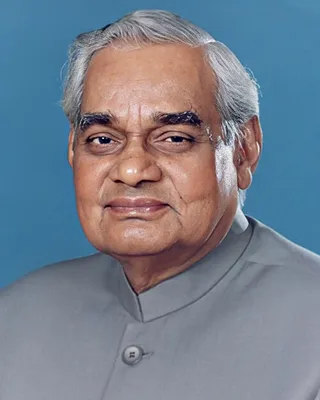
Atal Bihari Vajpayee was an Indian statesman, poet, and writer who served as Prime Minister, blending cultural nationalism with political moderation.
Atal Bihari Vajpayee was a prominent Indian figure, serving as Prime Minister for multiple terms and holding a significant role in the Bharatiya Janata Party (BJP) and its predecessor, the Bharatiya Jana Sangh. His political philosophy is described as a blend of cultural nationalism, democratic pluralism, and pragmatic statecraft, emphasizing India's civilizational history as a foundation for national development. Vajpayee was also a noted Hindi poet and writer, with his speeches and poetry often reflecting a synthesis of political pragmatism and traditional Indian cultural and philosophical themes.
His early life was influenced by the Rashtriya Swayamsevak Sangh (RSS), shaping his worldview on nation-building and self-cultivation. He was a long-serving parliamentarian, representing various constituencies and holding the position of external affairs minister. Vajpayee's premiership saw significant events, including India's nuclear tests, diplomatic overtures to Pakistan, and various economic reforms. He was recognized with India's second and highest civilian awards for his contributions to the nation.
Early Influences and Political Beginnings
Born in 1924, Atal Bihari Vajpayee's early life and worldview were significantly shaped by his association with the Rashtriya Swayamsevak Sangh (RSS). His education included a Master of Arts in political science, and his early activism began with the Arya Samaj's youth wing before he joined the RSS as a volunteer. He later became a full-time worker (pracharak) for the RSS. His involvement with the RSS instilled a focus on self-cultivation and disciplined nation-building. Vajpayee's entry into politics was facilitated by the RSS, which seconded him to the newly formed Bharatiya Jana Sangh, a Hindu right-wing party. He quickly rose through the ranks, becoming a national secretary and later the party's national president. His oratorical skills were recognized early on, with Prime Minister Jawaharlal Nehru himself predicting a future premiership for Vajpayee.
Political Philosophy and Ideology
Vajpayee's political philosophy is characterized by a unique synthesis of cultural nationalism, democratic pluralism, and pragmatic governance. Analysts note his frequent invocation of India's ancient civilizational history, framing national progress as both a political and a cultural endeavor. His approach is often seen as a conciliatory form of Indian conservatism, aiming to integrate traditional cultural values with the framework of modern democratic systems. This perspective laid the groundwork for later policies emphasizing national identity and self-reliance. His speeches and writings frequently combined practical political considerations with themes drawn from India's rich philosophical and cultural heritage, seeking to harmonize cultural identity with democratic inclusivity.
Prime Ministerial Tenure and National Policy
Serving as Prime Minister of India, Vajpayee led the nation through a period marked by significant geopolitical and domestic developments. His government conducted India's nuclear tests in 1998, a move that underscored national self-assertion. He pursued diplomatic engagement with Pakistan, including a historic bus journey to Lahore and later hosting a summit in Agra. Domestically, his administration introduced economic and infrastructural reforms, encouraging private sector growth, foreign investment, and privatization. Despite these efforts, his tenure also faced considerable security challenges, including border incursions and terrorist attacks, which led to major military mobilizations and a recalibration of national security policy.
Key Ideas
- Synthesis of cultural nationalism, democratic pluralism, and pragmatic statecraft.
- National development as a moral and cultural project rooted in civilizational history.
- Harmonizing cultural identity with democratic pluralism.
- Combining political pragmatism with Indian cultural and philosophical traditions.
Books by Arun Kumar Lahiry
1 free public domain book · Read online or download