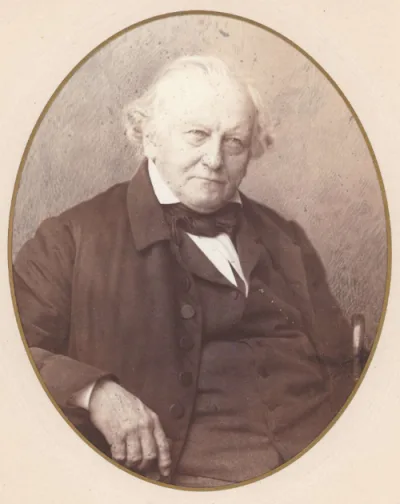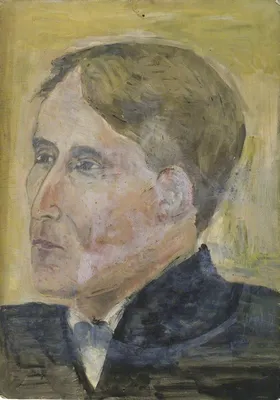
Arthur Waley
Arthur Waley was an English orientalist acclaimed for translating Chinese and Japanese literature, bridging Eastern cultures for Western readers.
Arthur Waley (1889–1966) was an English scholar and translator celebrated for his accessible renditions of classical Chinese and Japanese works. Despite his profound knowledge, he deliberately avoided academic positions, preferring to translate a diverse array of classical literature for a general audience. His prolific output, spanning poetry and novels, significantly introduced East Asian literary traditions to the English-speaking world. He never visited East Asia, nor did he learn to speak modern Chinese or Japanese, yet his translations are considered seminal contributions to the field.
Waley's career began with poetry, including "A Hundred and Seventy Chinese Poems" and "Japanese Poetry: The Uta." He later translated seminal novels like "The Tale of Genji" and "Monkey." Beyond literature, he engaged with Chinese philosophy and Asian art. He was recognized with several honors, including the Queen's Gold Medal for Poetry. His work is often praised for its poetic quality, with some translations considered poems in their own right. A fellow sinologist described him as "the great transmitter of the high literary cultures of China and Japan to the English-reading general public."
Literary Transmission and Translation
Arthur Waley's primary contribution was as a bridge between East Asian literary traditions and the Western public. He specialized in translating Chinese and Japanese poetry and novels, making these works accessible through his fluent and often poetic English prose. His translations were not merely academic exercises; they were crafted for a broad readership, a deliberate choice that set him apart from many scholarly contemporaries. He translated a wide range of classical texts, including "A Hundred and Seventy Chinese Poems" (1918), "Japanese Poetry: The Uta" (1919), "The Tale of Genji" (1925–26), and "Monkey" (1942). His approach prioritized conveying the meaning and spirit of the original works, even if it meant deviating from strict stylistic fidelity, believing this was crucial for Western readers. This dedication earned him significant acclaim and cemented his reputation as a key figure in introducing Eastern literature to the West.
Scholarly Independence and Personal Interests
Despite his extensive knowledge and scholarly achievements, Waley consciously steered clear of formal academic appointments. He educated himself in Classical Chinese and Japanese, initially to assist with cataloging Oriental prints and manuscripts at the British Museum, where he worked for many years. However, he left the museum in 1929 to dedicate himself entirely to writing and translation. This independence allowed him to pursue a personal selection of texts, rather than adhering to a prescribed academic syllabus. His interests extended beyond literature to include Chinese philosophy, biographies, and both Asian and Western art. This broad engagement with culture, coupled with his self-taught erudition, allowed him to develop a unique perspective that informed his influential translations and writings.
Philosophical and Esoteric Engagement
Waley's work delved into the philosophical underpinnings of ancient Chinese thought, making complex ideas accessible to a Western audience. His translations of foundational texts like the "Analects of Confucius" and "The Way and Its Power" (a study and translation of the Tao Te Ching) are still widely read. He also produced "Three Ways of Thought in Ancient China," which explored major philosophical schools. While not explicitly focused on occultism, his engagement with Taoism and Confucianism provided insights into ancient Chinese cosmology, ethics, and metaphysics. His interest in shamanism, as evidenced in "The Nine Songs: A Study of Shamanism in Ancient China," further highlights his exploration of less conventional spiritual and ritualistic aspects of ancient Chinese culture, connecting with the esoteric dimensions of these traditions.
Key Ideas
- Transmission of East Asian literature to Western audiences
- Accessibility of classical texts for general readership
- Meaning and spirit over strict stylistic fidelity in translation
- Exploration of Chinese philosophy and ancient spiritual practices
Notable Quotes
“the great transmitter of the high literary cultures of China and Japan to the English-reading general public; the ambassador from East to West in the first half of the 20th century”
“self-taught, but reached remarkable levels of fluency, even erudition, in both languages. It was a unique achievement, possible (as he himself later noted) only in that time, and unlikely to be repeated.”
“selected the jewels of Chinese and Japanese literature and pinned them quietly to his chest. No one ever did anything like it before, and no one will ever do it again.”
“There are many westerners whose knowledge of Chinese or Japanese is greater than his, and there are perhaps a few who can handle both languages as well. But they are not poets, and those who are better poets than Waley do not know Chinese or Japanese. Also the shock will never be repeated, for most of the works that Waley chose to translate were largely unknown in the West, and their impact was thus all the more extraordinary.”
Books by Arthur Waley
5 free public domain books · Read online or download