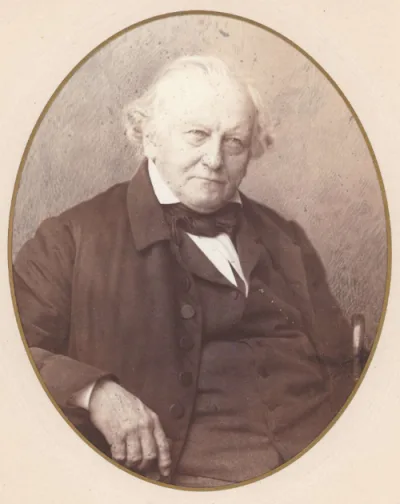
✍️ Author Biography
Arthur John Hopkins
📅 2025 – 2027
🌍 American
📚 1 free book
Johns Hopkins University, founded in 1876, pioneered the research university model in the U.S., integrating teaching and research.
Established in 1876 and named for its primary benefactor, businessman and philanthropist Johns Hopkins, this private research university in Baltimore, Maryland, revolutionized American higher education. Modeled after European research institutions, it was the first U.S. university to emphasize the integration of teaching and research. The university's founding endowment, the largest in U.S. history at the time, was derived from Johns Hopkins's estate. Daniel Coit Gilman served as its first president, guiding the institution to become a leader in graduate education and scholarly discovery. The university has consistently ranked high in research and development expenditures and is recognized for its influential School of Medicine, founded in 1893, which was a pioneer in admitting women and emphasizing research. With multiple campuses and academic divisions, Johns Hopkins continues to be a significant center for academic and scientific advancement.
Foundational Principles and Philanthropy
Johns Hopkins University was established in 1876, built upon a significant bequest from its namesake, Johns Hopkins, a childless Quaker businessman. His $7 million donation, a record at the time, funded both the university and an affiliated hospital in Baltimore. The university's charter was influenced by the European research university model, particularly German institutions like Heidelberg University. This approach shifted the focus of American higher education from merely imparting existing knowledge to actively pursuing new discoveries. Daniel Coit Gilman, the university's first president, championed the integration of teaching and research, a concept considered groundbreaking and ambitious for its era. This foundational philosophy positioned Johns Hopkins as a model for modern research universities in the United States.
Academic Innovation and Expansion
Under President Daniel Coit Gilman, Johns Hopkins University embarked on an ambitious academic experiment, merging teaching with research and expanding graduate education. Gilman recruited leading scholars and scientists, fostering an environment for advanced study and faculty research. The university quickly became a trendsetter in doctoral programs and a hub for scholarly publications, with the Johns Hopkins University Press being the oldest continuously operating American university press. The establishment of the School of Medicine in 1893, alongside the hospital, marked a significant milestone. This medical school was notable for being the first to admit women on equal terms with men and for requiring a bachelor's degree, influenced by the efforts of Mary E. Garrett. It became a prototype for academic medicine, emphasizing bedside learning, research, and laboratory training.
Campus Development and Research Prowess
The university's early plans to establish its campus on Johns Hopkins's Clifton estate faced financial challenges due to the depreciation of Baltimore and Ohio Railroad stocks. Consequently, the university initially operated in downtown Baltimore. In the early 20th century, the university acquired the Homewood Estate in north Baltimore, which became its main campus. The architectural style of the original Homewood House influenced the campus design. Over the decades, Johns Hopkins has expanded its academic offerings, establishing schools of public health, international affairs, and music. The Johns Hopkins Applied Physics Laboratory (APL), founded in 1942, has been a key government defense contractor, and the university has consistently led U.S. institutions in federal research funding since 1979.
Key Ideas
- Integration of teaching and research
- Emphasis on scientific discovery and advanced scholarship
- Model for the modern research university
- Pioneering coeducational graduate medical education
Notable Quotes
“The best teachers are usually those who are free, competent and willing to make original researches in the library and the laboratory.”