Arjan Dass Malik
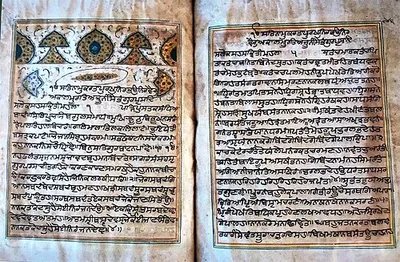
The Guru Granth Sahib is Sikhism's central scripture, containing hymns from diverse mystics and saints, including Sikh Gurus and figures from other faiths.
The Guru Granth Sahib serves as the primary religious text for Sikhism, revered as the ultimate spiritual authority. This scripture, comprising 1430 pages, features 5,894 hymns attributed to a variety of spiritual figures. These contributors include Sikh Gurus, mystics known as Bhagats, bards called Bhatts, and devoted Sikhs referred to as Gursikhs. Notably, the Guru Granth Sahib is distinctive among foundational religious texts for its inclusion of devotional poetry from individuals outside the Sikh faith, encompassing Hindu and Muslim saints. Furthermore, it incorporates compositions from individuals across different social strata, including those from lower castes. The collection also contains the teachings of the Sikh Gurus themselves, offering a comprehensive spiritual guide.
Authorship and Categorization
The authors whose writings are compiled within the Guru Granth Sahib are traditionally categorized into four main groups by scholars: the Sikh Gurus, Bhagats (devotees), Bhatts (bards), and Gursikhs (devoted Sikhs). While the core belief for Sikhs is adherence to the Shabad Guru—the divine word within the scripture—the hymns themselves originate from a diverse array of individuals. The scripture holds compositions from six Sikh Gurus, although some scholars suggest that writings from Guru Har Rai and Guru Gobind Singh might also be present, evidenced by attributions of specific verses to them.
Mystical and Devotional Contributions
The Bhagats, numbering fifteen, were holy individuals from various spiritual traditions whose teachings are featured in the Guru Granth Sahib under the title Bani Bhagtaan Ki. The term 'Bhagat' signifies devotion, stemming from the Sanskrit word 'Bhakti.' Their belief in a singular God predates Kabir's compilation efforts. Among these Bhagats, Farid and Bhikan are identified as Muslim Sufis, highlighting the scripture's inclusive nature. The eleven Bhatts, often described as Hindu Saraswat Brahmins who became followers of Guru Nanak, contributed as bards. The four Gursikhs, who were deeply devoted Sikhs, also added their voices to this sacred compilation.
Debates and Inclusions
Certain authorships within the Guru Granth Sahib have been subjects of scholarly debate. For instance, two hymns attributed to Bhai Mardana are questioned by some due to the use of the pen name Nanak within them, and because 'Mardana' can refer to a type of verse. Similarly, a composition by Bhatt Tall is debated, with some suggesting it might be a scribal error for Bhatt Kalshar. The scripture also includes a unique narrative concerning Sri Chand, son of Guru Nanak, who is said to have completed a section of the Gauri Sukhmani composition at the request of Guru Arjan. Conversely, Sikh tradition recounts that Guru Arjan declined to include works from figures like Pilu, Kahna Bhagat, Chajju Bhagat, and Shah Husain, deeming their compositions to be incompatible with Sikh tenets due to their pessimistic outlooks and promotion of worldly detachment.
Books by Arjan Dass Malik
1 free public domain book · Read online or download