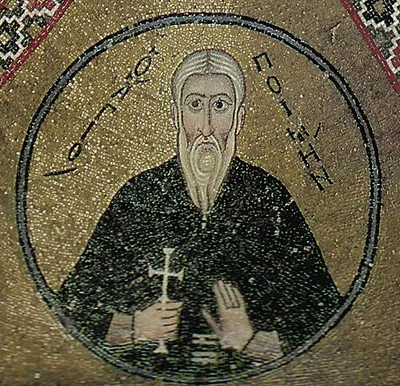
Apophthegmata Patrum
Poemen the Great, a Desert Father, is the most quoted elder in the Sayings of the Desert Fathers, known for spiritual guidance over asceticism.
Poemen the Great (c. 340–450) was a prominent Christian monk and one of the early Desert Fathers, revered for his profound spiritual wisdom. His name, meaning "shepherd," accurately reflects his role as a compassionate guide rather than an extreme ascetic. He is honored as a saint in Eastern Christianity, with a feast day on August 27th (Julian) or September 9th (Gregorian).
Living initially in Scetis, a significant center of early Christian monasticism, Poemen, along with other monks, relocated after raids in 407 AD. This displacement led to the preservation of the collective monastic wisdom, forming the core of the Apophthegmata Patrum (Sayings of the Desert Fathers), where Poemen is the most frequently cited elder. His teachings emphasized tolerance and gentle correction, exemplified by stories where he advocated for compassion towards monks struggling with spiritual weaknesses, often reducing severe penances and offering understanding instead of judgment.
Spiritual Guidance and Compassion
Poemen was distinguished by his approach to spiritual leadership, often described as that of a wise shepherd rather than a harsh ascetic. His teachings prioritized understanding and leniency towards the failings of others. Anecdotal accounts illustrate his compassionate nature; for instance, when monks fell asleep during prayer, Poemen advised allowing them rest, even supporting their heads, rather than waking them harshly. He consistently advocated for reduced penances for those who stumbled, transforming a potential three-year penance for a grave sin into a mere three days. This emphasis on mercy and refraining from judgment was central to his spiritual ethos, as he believed internal condemnation was a form of incessant 'babbling'.
The Apophthegmata Patrum and Legacy
Poemen's significant presence in the Apophthegmata Patrum, where he is quoted more than any other elder, highlights his influence on early monastic thought. It is widely believed that Poemen and his group were instrumental in compiling these sayings, preserving the wisdom of the Scetis monks after their dispersal. His ability to recall and transmit these teachings is often attributed to his exceptional memory. While some scholars debate whether the "Poemen" in the sayings represents a single historical figure or a composite archetype of a desert elder, figures like Wilhelm Bousset and William Harmless recognize him as a historical personality. His charisma was noted, teaching through example, advising a visiting monk to "be their example, not their legislator."
Key Ideas
- Spiritual guidance through compassion and understanding
- Tolerance for the weaknesses of others
- Emphasis on example over legislation
- The importance of refraining from judgment
Notable Quotes
“For my part, when I have seen a brother who is dozing, I put his head on my knees and let him rest.”
“No, be their example, not their legislator.”
“A man may seem to be silent, but if his heart is condemning others, he is babbling incessantly.”
“Many of our Fathers have become very courageous in asceticism, but in fineness of perception there are very few.”
“We have not been taught to kill our bodies, but to kill our passions.”
Books by Apophthegmata Patrum
2 free public domain books · Read online or download