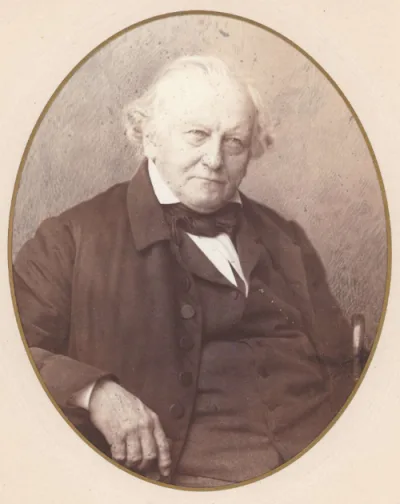
Antti Marjanen
Salome was a follower of Jesus mentioned in canonical and non-canonical texts, often identified with various women and holding significance in mystical traditions.
Salome is a figure appearing in the New Testament and apocryphal writings, known as a follower of Jesus and one of the Myrrhbearers who discovered his empty tomb. Interpretations have frequently identified her with other unnamed women in the Gospels, notably as the mother of apostles James and John, and as the wife of Zebedee. Medieval traditions further associated her with Saint Anne's lineage, suggesting she was a half-sister to Mary, the mother of Jesus.
The name 'Salome' itself is likely a Hellenized form of the Hebrew word for 'peace'. Historically, the name was common, borne by various figures in Judea, including relatives of Herod the Great and Queen Salome Alexandra. Within the canonical Gospels, Salome is named as present at the crucifixion and among those who went to anoint Jesus' body. Non-canonical texts, such as the Gospel of Thomas and the Gospel of the Egyptians, depict her more directly as a disciple, engaging in dialogues with Jesus and exploring themes of spiritual understanding and the nature of existence. These texts highlight a tradition where Salome's role extended beyond mere witness to active engagement with Jesus' teachings, sometimes exploring her personal journey and understanding of divine principles.
Role in Canonical and Non-Canonical Gospels
In the canonical Gospels, Salome is primarily noted as a witness to Jesus' crucifixion and as one of the women who discovered the empty tomb. Mark's Gospel identifies her as a Myrrhbearer, present at the crucifixion and involved in anointing Jesus' body. Matthew's Gospel, in a parallel passage, mentions the 'mother of Zebedee's children,' whom tradition often equates with Salome. John's Gospel, while listing women at the crucifixion, does not name Salome but is interpreted by some to include her as Jesus' aunt. Beyond the canonical accounts, apocryphal texts offer a more prominent role. The Gospel of Thomas and the Greek Gospel of the Egyptians portray Salome as a disciple, engaging in direct conversation with Jesus about spiritual matters. These texts suggest an early tradition that viewed Salome not just as a follower but as a student actively seeking understanding, sometimes touching on themes of creation and spiritual liberation.
Interpretations and Traditions
Salome's identity has been subject to various interpretations throughout history. She is frequently identified with the mother of James and John, apostles of Jesus, linking her to significant figures within the early Christian movement. Medieval traditions, particularly those surrounding Saint Anne, posited Salome (as Mary Salome) as one of the Three Marys, making her a potential half-sister to Jesus' mother. This lineage placed her within a key familial and spiritual network. In later traditions, she is sometimes depicted as a believing midwife who testified to the miraculous birth of Jesus, as seen in the Protevangelion of James. These varied identifications highlight her multifaceted presence in early Christian narratives and devotional practices, underscoring her perceived importance in the foundational events of Christianity.
Mystical and Gnostic Connections
Salome appears in texts that have connections to mystical and Gnostic traditions. The Gospel of Thomas presents a dialogue where Salome identifies herself as Jesus' disciple, and Jesus speaks of spiritual unity and enlightenment. The Greek Gospel of the Egyptians features Salome questioning Jesus about the cessation of death, to which he responds by referencing the role of women in procreation, prompting Salome's remark about her own childless state. This exchange hints at an early association of Salome with discussions on cosmology and the nature of existence. Furthermore, Celsus, an early critic of Christianity, mentions 'Harpocratian Christians' tracing their lineage to Salome, suggesting a connection to esoteric groups that may have incorporated her figure into their teachings, potentially linking her to Gnostic concepts of knowledge and spiritual awakening.
Key Ideas
- Salome as a follower and disciple of Jesus
- Identification with multiple female figures in the Gospels
- Role in witnessing the crucifixion and resurrection
- Inclusion in mystical and Gnostic traditions
- Symbolism in later Christian art and legend
Notable Quotes
“There were also women looking on afar off: among whom was Mary Magdalene, and Mary the mother of James and of Joses; and Salome who also followed Him and ministered to Him when he was in Galilee. And many other women who followed Him to Jerusalem.”
“Among which was Mary Magdalene, and Mary the mother of James and Joses, and the mother of Zebedee's children.”
“And when the sabbath was past, Mary Magdalene, and Mary the mother of James, and Salome, had bought sweet spices, that they might come and anoint him.”
“Then he came into Jericho. And the sister of the young man whom Jesus loved was there with his mother and Salome, but Jesus would not receive them.”
“So long as women bring forth, for I come to end the works of the female.”
Books by Antti Marjanen
2 free public domain books · Read online or download