Antony Cyril Sutton
Antony C. Sutton was a British-American author and professor known for his critical analyses of Western corporate and financial influence on global events.
Antony Cyril Sutton, born in London in 1925, was a writer, researcher, economist, and professor who later became a U.S. citizen. He held academic positions and research fellowships, notably at the Hoover Institution. Sutton's prolific writing career focused on critiquing the role of corporations and financial institutions in shaping historical events and geopolitical conflicts.
His research often posited that powerful economic elites manipulated events, such as revolutions and wars, to serve their own interests, fostering collectivism and corporate socialism. Sutton argued that Western technology and funding played a significant role in the development of the Soviet Union and that the Cold War conflicts were partly orchestrated for the benefit of the military-industrial complex. His work frequently explored themes of financial power, government influence, and the alleged machinations of secret societies.
Academic and Research Background
Born in London in 1925, Antony Cyril Sutton pursued higher education at several universities, including the University of London, the University of Göttingen, and the University of California, Los Angeles, eventually earning a D.Sc. from the University of Southampton. He served as an economics professor at California State University, Los Angeles, and held a research fellowship at Stanford University's Hoover Institution on War, Revolution, and Peace from 1968 to 1973. His academic work laid the foundation for his later controversial theories on the interplay of finance, technology, and global politics.
Critique of Western Influence and Soviet Development
During his time at the Hoover Institution, Sutton authored the multi-volume study 'Western Technology and Soviet Economic Development.' In this work, he contended that Western nations, particularly the United States, were instrumental in building the Soviet Union's industrial and technological capabilities. Sutton argued that U.S. corporations and taxpayer funds significantly contributed to Soviet enterprises, including steel plants and automobile factories. He further suggested that the Soviet Union's acquisition of advanced missile technology was facilitated by the transfer of crucial manufacturing equipment from the West, implying a complex and often contradictory dynamic within the Cold War.
Theories on Financial Elites and Global Power
Sutton extended his critical analysis to the influence of Wall Street and financial elites on major historical events. His books, such as 'Wall Street and the Bolshevik Revolution,' 'Wall Street and FDR,' and 'Wall Street and the Rise of Hitler,' proposed that powerful financiers orchestrated revolutions and political shifts to create captive markets and consolidate economic power. He assessed the policies of figures like Franklin Delano Roosevelt as aligning with a form of 'corporate socialism' designed to ensure the monopoly acquisition of wealth by economic elites. Sutton believed this was a deliberate long-term strategy to nurture collectivism and prevent the free market from eroding their influence.
Investigating Secret Societies and Control
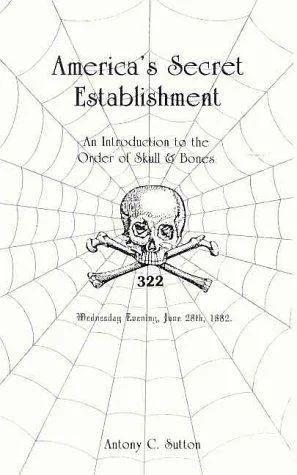
In the early 1980s, Sutton focused his research on clandestine organizations, particularly the Order of Skull and Bones. Utilizing public records and leaked documents, he authored 'America's Secret Establishment: An Introduction to the Order of Skull and Bones,' which he considered his most significant work. Sutton's research into this and related organizations suggested a pervasive, hidden influence shaping education, government policy, and international conflict. His proposed solutions often centered on individual self-reliance, voluntary associations, and decentralized societal structures to counter the perceived abuses of concentrated power.
Key Ideas
- Western corporations and finance played a significant role in the development of the Soviet Union.
- The Cold War conflicts were partly orchestrated to benefit military-industrial contracts and financial elites.
- Powerful financial elites manipulate historical events, including revolutions and political leadership, to serve their economic interests.
- The rise of collectivism and 'corporate socialism' is a deliberate strategy by economic power elites to maintain wealth and control.
- Secret societies, like the Order of Skull and Bones, exert hidden influence over global affairs and institutions.
- Individual self-reliance and decentralized governance are solutions to the abuses of concentrated power.
Books by Antony Cyril Sutton
2 free public domain books · Read online or download