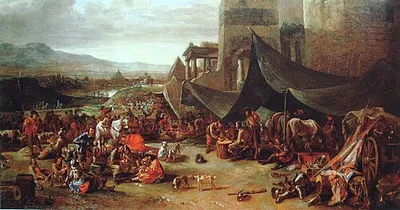
Antonio Maria Sacco
Antonio Maria Sacco is not mentioned in the provided text about the Sack of Rome.
The provided text details the catastrophic Sack of Rome in 1527, a pivotal event during the War of the League of Cognac. Mutinous troops of Holy Roman Emperor Charles V, largely unpaid and composed of German, Spanish, and Italian soldiers, breached the city's defenses. Despite orders to the contrary, they engaged in widespread looting, killing, and holding citizens for ransom. Pope Clement VII was forced to seek refuge and eventually pay a substantial ransom. The sack resulted in a drastic population decline in Rome due to violence, famine, and plague. It also significantly exacerbated religious tensions between Catholics and Lutherans and is often considered a marker for the end of the Italian High Renaissance.
Background to the Conflict
The Sack of Rome was precipitated by Pope Clement VII's apprehension regarding the growing power of Emperor Charles V. In response, the Pope formed the League of Cognac, an alliance with Charles V's adversary, King Francis I of France, along with several Italian states. Hostilities began in 1526, but an initial campaign against Siena failed, revealing the weakness of the papal forces. Despite defeating the French army, the Imperial forces lacked funds to pay their soldiers. This led to a mutiny, compelling the Imperial commander to march towards Rome, a city vulnerable due to its unstable political climate.
The Imperial Army and Its Composition
The Imperial army that marched on Rome comprised approximately 14,000 German Landsknechte, 6,000 Spanish soldiers, and an unspecified number of Italian infantry. While some German soldiers were Lutherans who viewed Rome as a religious target, the primary motivation for the sack was financial gain for the unpaid troops. The army was further augmented by outlaws and deserters. Notable figures within the army included Duke Charles III of Bourbon, Georg von Frundsberg, Fabrizio Maramaldo, and Philibert, Prince of Orange. Despite claims of helplessness by Duke Bourbon, eyewitness accounts suggest he was aware of his troops' intentions.
The Siege and Devastation of Rome
On May 6, 1527, the Imperial army attacked Rome. Duke Charles III of Bourbon was fatally wounded during the assault. With their leader gone, the imperial troops lost all restraint and successfully stormed the city. The Swiss Guard made a valiant but ultimately futile stand, suffering heavy casualties. What followed was a period of horrific violence, including widespread rape, murder, and destruction of religious sites and private property. Churches were desecrated, relics profaned, and mock religious ceremonies were performed, particularly by the Lutheran German troops against Catholic symbols. Citizens were subjected to extreme brutality, and many were taken captive for ransom. Cardinal Pompeo Colonna briefly attempted to impose order but the pillaging continued for days.
Aftermath and Long-Term Consequences
The Sack of Rome had profound and lasting effects on Italy and Europe. It significantly weakened Pope Clement VII's political and financial standing, forcing him into a conciliatory policy towards Charles V. The event is widely regarded as the end of the Italian High Renaissance, marking a decline in Rome's cultural prominence and patronage. The war also represented a final bid for independence for many Italian city-states. The violence spread into surrounding regions, further destabilizing the area. The sack deepened religious animosity between Catholics and Lutherans, contributing to the broader religious conflicts of the era.
Books by Antonio Maria Sacco
1 free public domain book · Read online or download