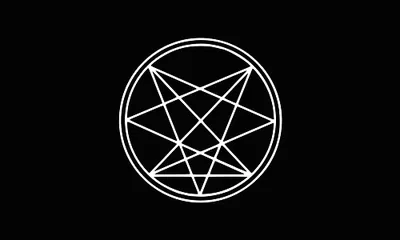
Anton Long (ONA)
Anton Long is the pseudonym associated with the Order of Nine Angles, a Satanic network blending neo-Nazism, Hermeticism, and paganism.
Anton Long is a name closely linked to the Order of Nine Angles (ONA), a Satanic network originating in the United Kingdom. The ONA describes its approach as 'Traditional Satanism' and incorporates elements of Hermeticism and modern paganism. While the Order claims establishment in the late 1960s by a woman involved in pre-Christian traditions, academic research suggests 'Anton Long' is likely a pseudonym for British neo-Nazi activist David Myatt, a claim Myatt denies.
Long's writings from the late 1970s onwards were instrumental in propagating the Order's ideology. The ONA gained international recognition through its association with other neo-Nazi Satanic groups and later embraced the internet to further its reach. In recent years, it has been noted for its influence on neo-Nazi militant groups and extremist networks. The group's teachings involve a cyclical view of history divided into aeons, advocating for the establishment of a militaristic 'Imperium' and the colonization of the Milky Way by an 'Aryan' society. Their practices include breaking societal taboos, political extremism, violence, and human sacrifice, alongside magical practices aimed at achieving their goals.
Origins and Identity
The exact origins of the Order of Nine Angles (ONA) are obscured by secrecy and myth. The Order itself claims descent from ancient pre-Christian traditions that survived in Britain, passed down through small groups. According to their narrative, in the late 1960s, a grand mistress united three such groups to form the ONA. Around 1973, an individual known as 'Anton Long' joined, later becoming the grand master after the original leader's migration. Academics studying the ONA widely believe that 'Anton Long' is a pseudonym for David Myatt, a British neo-Nazi activist known for similar esoteric and political beliefs, though Myatt denies this connection. Long, under this persona, is credited with codifying and expanding the Order's teachings from the late 1970s onwards.
Ideology and Practices
The ONA promotes a unique worldview centered on the concept of aeons, divisions of human history and civilization. They believe the current Western civilization is threatened by 'Magian/Nazarene' influences, primarily Judeo-Christianity, which they aim to overcome to establish a militaristic 'Imperium'. This Imperium is envisioned as a precursor to a galactic civilization where 'Aryan' society would colonize the Milky Way. Their spiritual path involves challenging societal norms through isolation, crime, political extremism, violence, and ritualistic human sacrifice. Practitioners engage in magic, channeling energies from an 'acausal' realm to influence their 'causal' reality and advance their ultimate objectives.
Structure and Influence
The ONA operates not as a centralized hierarchy but as a network of associates called the 'kollective,' inspired by texts from Long and the 'inner ONA.' This network is composed of clandestine cells known as 'nexions.' Academic estimates place the number of broadly associated individuals in the low thousands. The ONA has been linked to violent acts, including rapes, killings, and terrorism, perpetrated by individuals influenced by its ideology. This has led to calls for its proscription as a terrorist group, and it has been banned in New Zealand. The group has also been characterized as a neo-fascist movement due to its fusion of esoteric tradition with violent political accelerationism.
Key Ideas
- Aeons: A concept dividing human history into distinct eras, each with a corresponding civilization.
- Imperium: A militaristic new social order envisioned by the ONA as a necessary step towards galactic civilization.
- Acausal Realm: A theoretical dimension where the laws of physics do not apply, from which magical energies are channeled.
- Traditional Satanism: The ONA's self-description, blending Satanic concepts with Hermeticism and pagan elements.
Books by Anton Long (ONA)
1 free public domain book · Read online or download