Annie Wood Besant
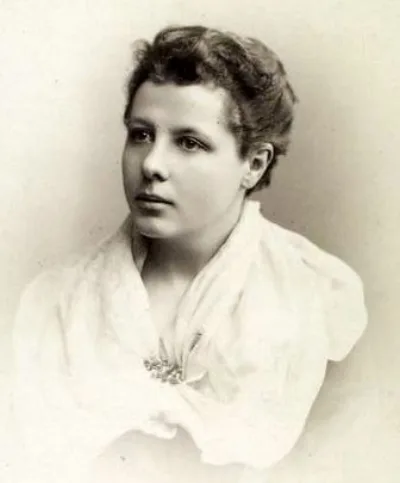
Annie Besant was a prominent activist, socialist, and theosophist who championed women's rights and Indian independence.
Annie Besant, born in 1847, was a dynamic English figure involved in numerous social and political movements. Initially a socialist and secularist, she became a powerful orator and writer, advocating for women's rights, workers' rights, and secularism. Her early activism included involvement with the National Secular Society and significant legal battles over birth control advocacy.
Besant's life took a significant turn when she encountered Helena Blavatsky and became deeply engrossed in theosophy. This led her to join the Theosophical Society, where she rose to prominence, eventually becoming its president in 1907. Her focus shifted towards theosophical teachings, and she traveled extensively, including to India, where she played a role in establishing educational institutions like the Central Hindu School. She also became involved in Indian politics, supporting Home Rule and serving as the first female president of the Indian National Congress in 1917. Besant continued her work for Indian independence and theosophy until her death in 1933.
Early Activism and Secularism
Annie Besant began her public life as a fervent socialist and secularist in England. She became a prominent speaker for the National Secular Society, working closely with Charles Bradlaugh. Her activism extended to various social causes, including women's rights, labor movements, and birth control. In 1877, she and Bradlaugh faced prosecution for publishing "Fruits of Philosophy," a book advocating for family planning, which brought them widespread attention. Besant was also a leading voice for the Fabian Society and the Social Democratic Federation, and was elected to the London School Board, demonstrating her commitment to education and social reform.
Theosophy and Spiritual Pursuits
In 1890, Annie Besant's path intersected with Helena Blavatsky, marking a pivotal shift in her life towards theosophy. Her engagement with the Theosophical Society deepened, leading her to become a prominent lecturer on its principles. This spiritual path took her to India, where she became actively involved in establishing educational institutions, notably the Central Hindu School. She also contributed to the growth of the International Order of Co-Freemasonry. In 1907, Besant assumed the presidency of the Theosophical Society, guiding its international headquarters in Adyar, Madras.
Indian Nationalism and Later Life
Besant's involvement in India extended beyond theosophy into the political sphere. She joined the Indian National Congress and was instrumental in launching the Home Rule League to advocate for India's self-governance. Her leadership in this movement culminated in her election as the first female president of the Indian National Congress in 1917. In her later years, she continued to champion Indian independence and theosophical ideals. She also notably traveled to the United States with Jiddu Krishnamurti, whom she identified as a spiritual leader, though he later rejected this designation.
Notable Quotes
“We intend to publish nothing we do not think we can morally defend. All that we publish we shall defend.”