Anne Pasquier
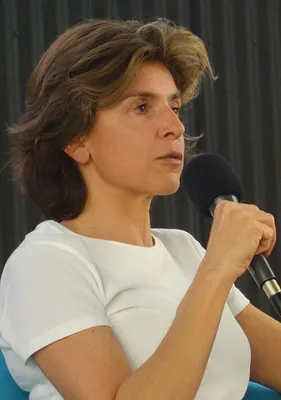
Anne Nivat is a French journalist and war correspondent known for her reporting on conflicts and the experiences of civilians, particularly women.
Anne Nivat, born in 1969, is a French journalist and war correspondent who has extensively covered conflicts in regions such as Chechnya, Iraq, and Afghanistan. Her work often focuses on character portraits and interviews, especially with women, detailing their experiences during wartime. She developed an early interest in Russia, influenced by her historian father and mother who taught her Russian.
Nivat's academic background includes a doctorate in political science from Sciences Po. Her early career involved reporting for Radio Free Europe/Radio Liberty and Transitions magazine. She gained significant recognition for her independent reporting from Chechnya in the late 1990s, where she adopted unconventional methods to access war zones and document the conflict. Her linguistic abilities, including fluency in Russian and English, and her perspective as a woman were noted as factors in her reporting.
She has authored numerous books, some of which have been bestsellers, and her journalism has appeared in major French and international publications. Nivat has received awards for her literary contributions, including the Albert Londres Prize. Her career has also involved periods of visa annulment and expulsion from Russia, followed by apologies and invitations to return.
Journalistic Focus and Methodology
Anne Nivat's journalistic career is distinguished by her deep engagement with the human cost of conflict. She is particularly noted for her ability to capture the personal narratives of civilians, with a consistent focus on the experiences of women in war-torn environments. This approach, characterized by in-depth interviews and character portraits, offers a nuanced perspective often overlooked in broader conflict reporting. Her work in Chechnya, where she operated independently and at times disguised herself to gain access, highlights a commitment to firsthand, unfiltered accounts. Nivat has stated that her gender often facilitated her access and reporting, as she was less likely to be perceived as a threat by military forces.
Influences and Linguistic Skills
Nivat's journalistic path has been influenced by esteemed war correspondents such as Ryszard Kapuściński and Curzio Malaparte. Her academic background in political science and her upbringing, which included learning Russian from her mother and having a father who was a historian of Russia, provided a strong foundation for her focus on Eastern European and Central Asian affairs. Beyond her native French, Nivat possesses fluency in Russian and English, and a working knowledge of Arabic. These linguistic skills have been crucial in her ability to connect with diverse populations and report from complex geopolitical landscapes, enabling her to conduct interviews and gather information directly from affected communities.
Literary Contributions and Recognition
Anne Nivat has authored a substantial body of work, including books that explore the aftermath of wars, the lives of individuals caught in conflict, and geopolitical analyses. Her book "Chienne de guerre: une femme reporter en Tchétchénie" earned her the prestigious Albert Londres Prize in 2000, recognizing her impactful reporting from Chechnya. Other notable works delve into the experiences of individuals in Algeria, Afghanistan, and Iraq, reflecting her continued dedication to documenting the human dimension of global conflicts. Her writings have been published in various languages, reaching a broad international audience and solidifying her reputation as a significant voice in contemporary war journalism.
Notable Quotes
“The fact that I am a woman helped me a great deal covering this war. No one pays attention to a woman. Whereas if you are a man, you might be arrested at any time.”
“The three elements which played in my favor were the fact that I speak Russian, the fact that I am a woman, and the fact that I am a part of the written press – I didn't need microphones. And the fourth element is luck.”
Books by Anne Pasquier
3 free public domain books · Read online or download