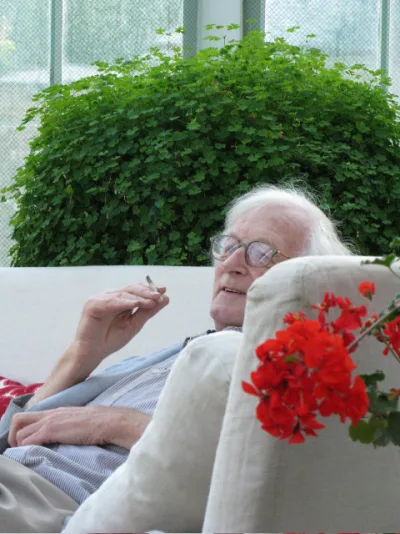
Anna Goddard
Goddard College, founded in 1938, was an experimental institution known for its low-residency and self-directed learning models, which closed in 2024.
Goddard College, established in 1938, operated as a private educational institution with a focus on experimental and non-traditional learning. Its educational philosophy was rooted in the connection between experience and education, emphasizing individual attention, student-led curricula, and a democratic learning community. The college initially began as Goddard Seminary in 1863, evolving into a college that pioneered innovative programs, including the first low-residency adult education program in the United States, launched in 1963. It utilized narrative evaluations instead of traditional grades and required students to design their own academic paths.
Over its history, Goddard College offered undergraduate and graduate degrees through various formats, including residential, low-residency, and distance learning. The institution had multiple campuses, including its main site in Plainfield, Vermont, and later expanded to Port Townsend, Washington, and Seattle. Despite its innovative approaches and accreditation by the New England Commission of Higher Education, the college faced financial difficulties and declining enrollment. This led to its closure at the end of the spring semester in 2024.
Founding and Educational Philosophy
Goddard College originated from Goddard Seminary, founded in 1863 and renamed in honor of its benefactors, Thomas A. and Mary Goddard. Under the leadership of Royce S. Pitkin, the institution transitioned in 1938 to a new model of education. This experimental college was chartered with a philosophy that prioritized individual student attention, democratic participation, and informality, diverging from more traditional, autocratic educational structures. For its initial 21 years, Goddard operated without accreditation but cultivated a reputation for innovation. Key aspects of its approach included using discussions as a primary teaching method, integrating students' entire lives into their personal curricula, incorporating practical work, and fostering a self-governing learning community where all members had a voice.
Innovative Program Development
A significant development at Goddard College was the creation of the Adult Degree Program (ADP) in 1963, pioneered by Evalyn Bates. This program is recognized as the country's first low-residency adult education initiative, designed to allow adults to pursue degrees without significantly disrupting their family or professional lives. Goddard was also a founding member of the Union for Experimenting Colleges and Universities, known for its use of narrative transcripts instead of letter grades and for learner-designed curricula. The college hosted numerous experimental programs throughout its existence, including the Goddard Experimental Program for Further Education, the Design Build Program, and the Institute for Social Ecology.
Evolution and Closure
Goddard College achieved accreditation in 1959. In 2002, it shifted to an exclusively low-residency model, discontinuing its residential undergraduate program after 54 years. The college expanded its presence to the West Coast in 2005 with a site in Port Townsend, Washington, and later offered programs in Seattle. In 2018, Goddard faced probation from its accrediting body due to concerns about leadership stability and finances, but this was lifted in 2020. Ultimately, financial challenges and a substantial drop in enrollment, from 1,900 in the 1970s to under 250 in 2024, led to the college's closure at the end of the spring semester in 2024.
Key Ideas
- Interconnectedness of experience and education
- Low-residency educational model
- Student-designed curricula
- Narrative evaluations instead of traditional grades
- Self-governing learning community
Books by Anna Goddard
1 free public domain book · Read online or download