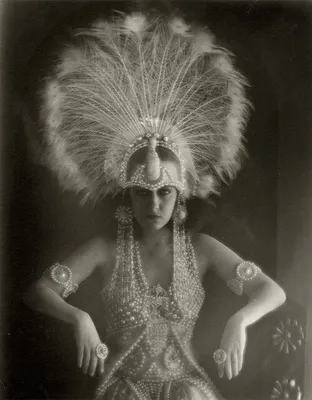
Ann Swanson
Gloria Swanson was a pioneering American actress known for her silent film stardom and Academy Award nominations.
Gloria Mae Josephine Swanson (1899-1983) was a prominent American actress who rose to fame in the silent film era of the 1920s. Born in Chicago and raised in a military family, her acting career began at age 15 after a visit to Essanay Studios. She quickly moved from walk-on roles to starring in comedy shorts for Mack Sennett's Keystone Studios.
Swanson then signed a seven-year contract with Famous Players–Lasky/Paramount Pictures, becoming a global star through her roles in films directed by Cecil B. DeMille and others. She was nominated for the Academy Award for Best Actress three times, including for her iconic role in "Sunset Boulevard" (1950). In 1925, she became a pioneering woman filmmaker by joining United Artists, where she produced and starred in her own productions. Despite a decline in film success in the 1930s, Swanson continued to act in films and television and on stage.
Early Life and Entry into Film
Born in Chicago in 1899, Gloria Swanson's early life was marked by frequent moves due to her father's U.S. Army service. Raised in the Lutheran faith with a diverse ancestry including Swedish, German, English, French, and Polish heritage, she experienced childhood in various locations, including Florida and Puerto Rico. Her introduction to the film industry occurred at age 15 when her aunt took her to visit Essanay Studios in Chicago. There, she encountered actor Francis X. Bushman, leading to her discovery by a tour guide and an initial offer for a brief walk-on role. This opportunity led to a stock contract, prompting Swanson to leave school and embark on her lifelong career in acting. She soon moved to California to work in Mack Sennett's Keystone Studios, appearing in comedy shorts opposite Bobby Vernon.
Stardom at Paramount and Pioneering Filmmaking
Swanson's career trajectory accelerated when she was recruited by Famous Players–Lasky, later Paramount Pictures, where she was placed under a seven-year contract. This period saw her transform into a global superstar, starring in a series of society-themed films directed by Cecil B. DeMille, such as "Male and Female" (1919), "The Affairs of Anatol" (1921), and "Beyond the Rocks" (1922). Her critically acclaimed performances in films like "Zaza" (1923) and "Madame Sans-Gêne" (1925) solidified her status. In 1925, she took a significant step by joining United Artists, becoming one of the film industry's early female producers. She produced and starred in "Sadie Thompson" (1928), earning an Academy Award nomination for Best Actress. Her transition to sound films with "The Trespasser" (1929) also garnered an Oscar nomination.
Later Career and Legacy
Despite her immense success, Swanson faced financial challenges and a decline in film opportunities during the 1930s. However, she experienced a significant career resurgence with her celebrated role as Norma Desmond in Billy Wilder's 1950 film "Sunset Boulevard," a performance that earned her an Academy Award nomination and a Golden Globe Award. While "Sunset Boulevard" was her most famous later role, she continued to act in a few more films and made guest appearances on television shows. She also participated in stage productions through road tours. Swanson's career spanned decades, leaving a lasting legacy as one of Hollywood's most iconic and influential actresses of the silent and early sound eras.
Books by Ann Swanson
2 free public domain books · Read online or download