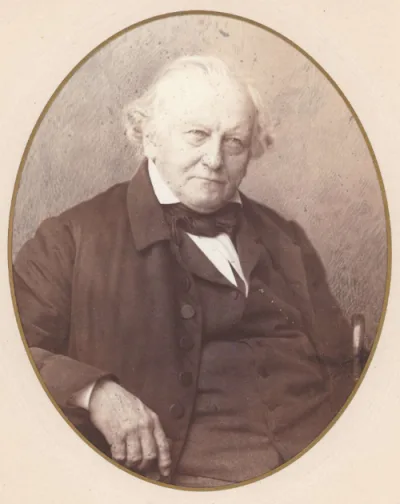
Angela Longo
William Gibson, a foundational cyberpunk author, explored technology's impact on humanity and coined the term 'cyberspace'.
William Gibson is a highly influential speculative fiction writer, widely recognized for his pioneering role in the cyberpunk genre. His early works, emerging in the late 1970s, focused on near-future noir narratives that examined the complex interplay between technology, cybernetics, and human consciousness, often depicting a fusion of 'lowlife and high tech.' Gibson coined the term 'cyberspace' in his 1982 short story 'Burning Chrome' and further popularized the concept, alongside the 'matrix,' in his seminal 1984 novel, Neuromancer. These foundational texts are credited with revitalizing science fiction in the 1980s.
Throughout his career, Gibson has explored various subgenres and themes. He expanded the Sprawl trilogy with subsequent novels and collaborated on the steampunk novel The Difference Engine. His Bridge trilogy delved into the societal shifts of near-future urban landscapes and late capitalism. Following the turn of the century, Gibson shifted towards more realist narratives set in contemporary times, achieving mainstream success with novels like Pattern Recognition. His later works, such as The Peripheral, have seen a return to more overt science fiction themes.
Gibson's impact extends beyond literature, influencing fields like film, music, design, and philosophy. He has been lauded by major publications, with The Guardian calling him "probably the most important novelist of the past two decades." His prolific output includes numerous short stories and critically acclaimed novels, solidifying his status as a visionary voice in speculative fiction.
Early Life and Influences
Born in Conway, South Carolina, William Gibson spent his formative years in Wytheville, Virginia. His father's work led to frequent family relocations. A significant early event was the death of his father when Gibson was young. He later described Wytheville as a place where modernity was viewed with suspicion, fostering a sense of alienation that he associates with his early engagement with science fiction. At age 13, he discovered the Beat Generation writers, particularly William S. Burroughs, whose work profoundly influenced his understanding of literary possibilities. Gibson also gravized towards science fiction and writers like Henry Miller, seeking refuge from a monocultural environment he found problematic. His mother, concerned about his academic performance, sent him to a boarding school in Arizona, an experience that, despite his initial resentment, proved valuable for his social development.
Counterculture, Travel, and the Dawn of Cyberpunk
Following his mother's death at 18, Gibson left school and immersed himself in the counterculture, traveling extensively in Europe and North America. He moved to Canada in 1967, partly to avoid the Vietnam War draft, though he noted he was never drafted. He managed Toronto's first head shop and became part of the draft-dodger community. His experiences in this milieu, alongside his travels through Europe and Istanbul, provided rich material for his later writing. He completed his high school diploma in Washington, D.C., and eventually settled in Vancouver with his wife, Deborah Jean Thompson. During the 1970s, he supported himself by reselling thrift store finds and later enrolled at the University of British Columbia, where he earned a degree in English. His academic studies exposed him to a wider literary landscape, including postmodernism, which further shaped his artistic vision.
Literary Beginnings and the Emergence of a New Genre
After obtaining his degree, Gibson briefly paused his writing, working various jobs, including a teaching assistant role. A pivotal moment occurred at a 1980 or 1981 Vancouver science fiction convention, where he met fellow panelist John Shirley. Shirley recognized Gibson's talent and encouraged him to pursue writing seriously, leading to Gibson selling his early short stories. Through Shirley, Gibson connected with Bruce Sterling and Lewis Shiner, who saw his work as groundbreaking and indicative of a new direction for science fiction. Gibson's reading of his short story 'Burning Chrome' at a 1981 convention in Denver, where Sterling was present, marked a significant step. The term 'cyberspace' originated in this story, laying the groundwork for the cyberpunk movement that Gibson, alongside Sterling and others, would help define.
Key Ideas
- Pioneering the cyberpunk subgenre of science fiction.
- Exploration of the impact of technology, cybernetics, and computer networks on humanity.
- Coining the term 'cyberspace' and popularizing its concept.
- Depicting near-future urban environments and societal changes.
- Fusion of 'lowlife and high tech' aesthetics.
Notable Quotes
“cyberspace”
“widespread, interconnected digital technology”
“combination of lowlife and high tech”
“Fragments of a Hologram Rose”
“probably the most important novelist of the past two decades”
Books by Angela Longo
1 free public domain book · Read online or download