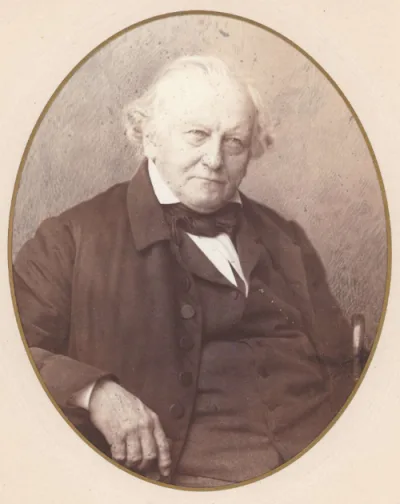
✍️ Author Biography
Aneta Panek
📅 1788 – 1790
🌍 British
📚 2 free books
⭐ Known for: The Crafty Whore (1658)
The Private Case was a restricted collection of erotica and pornography at the British Library, established in the 19th century and gradually opened.
The Private Case was a specialized collection within the British Museum and later the British Library, initially housing erotica and pornography. Its origins trace back to the mid-19th century, stemming from legal deposit acquisitions, bequests, and police seizures of objectionable materials. Over time, the collection's nature and accessibility evolved significantly.
Initially, materials deemed inappropriate for general readership were segregated. This practice continued as the British Museum transitioned into the British Library. The collection grew through substantial donations from notable collectors like Henry Spencer Ashbee and Charles Reginald Dawes. However, reflecting societal shifts, the library began to liberalize access to the Private Case from the 1960s onward, reclassifying items into the general collection.
By 1990, no new items were added to the Private Case, and all new erotic or pornographic material was openly cataloged. Currently, access to the collection is largely unrestricted, with exceptions for items in fragile condition. The collection, which once comprised around 4,000 works, now contains approximately 2,500 volumes still classified as part of the Private Case.
Origins and Development of the Private Case
The Private Case, a collection of erotica and pornography, began its existence within the British Museum, which served as Britain's national library. Its establishment is not precisely dated, but records suggest it started between 1836 and 1870. The collection's growth was fueled by several streams: books received through legal deposit, which mandated libraries to receive copies of all UK publications; bequests from private collectors; and materials seized by the police and subsequently transferred. Initially, the British Museum separated subversive and libellous works into a 'Suppressed Safe' collection, while erotica and pornography were kept in a locked cabinet known as the Private Case. Access to this material was strictly controlled, with its catalogue not available to the general public.
Expansion Through Bequests and Donations
The Private Case saw significant expansion through the generosity of dedicated collectors. A notable contribution came in 1900 from the book collector Henry Spencer Ashbee, whose bequest included 1,379 volumes of erotica among a larger collection. Anthropologist Eric Dingwall also donated numerous works over his lifetime and upon his death. Further bolstering the collection, bibliophile Charles Reginald Dawes bequeathed 246 works of erotic literature in 1964. These substantial acquisitions, alongside others, contributed to the collection's size and scope, though some items were eventually declassified and moved to the general collection.
Liberalization and Modern Access
Beginning in 1964, the British Library initiated a process of liberalizing access to the Private Case, a move reflecting the era's changing social attitudes. This involved revising the collection and moving many items to the general catalogue, making them available to a wider readership. This reclassification was largely completed by 1983. Since 1990, no new materials have been added to the Private Case; contemporary erotic or pornographic works are openly accessible and listed in the main catalogue. Presently, access to the Private Case is generally unrestricted, with the only limitations being for items that are too fragile to handle.
Key Ideas
- Legal deposit libraries' obligation to collect all published material, including restricted categories.
- Historical segregation of sensitive materials (erotica, pornography, subversive texts) into specialized collections.
- Evolution of library access policies in response to societal changes.
- The role of private collectors and bequests in shaping institutional collections.