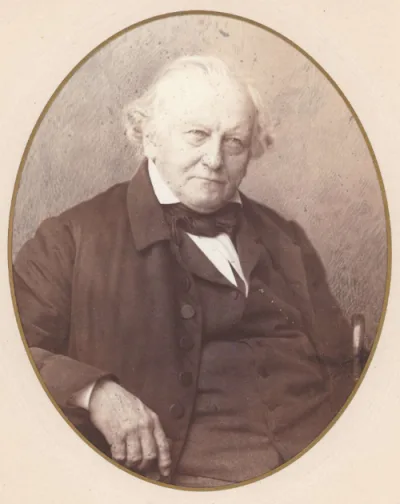
Andrews Norton
Andrews Norton was a Unitarian theologian and librarian, known for his scholarly work on early Christian texts.
Andrews Norton was a prominent Unitarian theologian and a significant figure in American intellectual life during the 19th century. He served as a librarian at Harvard University and later as a professor, contributing to theological and literary scholarship. His work often focused on biblical studies and the interpretation of early Christian writings, aiming to present a rational and historically grounded understanding of faith.
Norton was a respected voice within Unitarianism, a liberal branch of Christianity emphasizing reason and individual conscience. He engaged with the intellectual currents of his time, seeking to reconcile faith with emerging scientific and historical perspectives. His academic career and writings established him as a key proponent of liberal theology and a defender of intellectual inquiry within religious discourse. While the provided text focuses on the surname 'Norton,' Andrews Norton himself was a notable bearer of this name, associated with scholarly and theological pursuits.
Theological Scholarship and Unitarianism
Andrews Norton was a significant figure in 19th-century American Unitarianism, a theological movement that emphasized reason, human goodness, and the rejection of traditional doctrines like the Trinity. Within this context, Norton dedicated his scholarly efforts to the study of early Christianity. He was particularly interested in the historical and textual aspects of the Bible and the writings of the early Church Fathers. His aim was to provide a reasoned and scholarly defense of Christian beliefs, grounding them in historical evidence and rational interpretation rather than dogma or superstition. This approach aligned with the broader intellectual spirit of his era, which sought to reconcile faith with the advancements in historical criticism and science.
Academic Career and Influence
Norton held influential positions within academia, most notably at Harvard University. He served as a librarian, a role that undoubtedly deepened his engagement with historical texts and scholarly research. Later, he transitioned to a professorship, where he influenced a generation of students with his theological insights and critical approach to religious studies. His academic work was characterized by meticulous research and a commitment to presenting complex theological ideas in a clear and accessible manner. Through his teaching and publications, Norton played a crucial role in shaping the intellectual landscape of Unitarian theology and American higher education during his lifetime.
Key Ideas
- Rational interpretation of early Christian texts
- Defense of Unitarian theology through historical scholarship
- Reconciliation of faith with reason and historical criticism
Books by Andrews Norton
1 free public domain book · Read online or download