Andreea Deciu
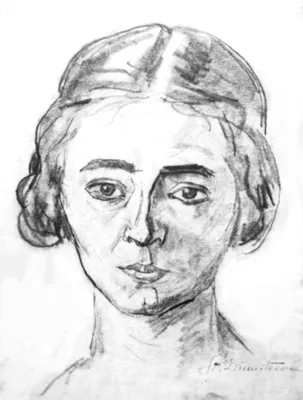
Romanian writer Ștefana Velisar Teodoreanu, wife of Ionel Teodoreanu, blended traditionalism with Orthodox moral themes and modernist echoes.
Ștefana Velisar Teodoreanu, born Maria Ștefana Lupașcu, was a Romanian novelist, poet, and translator, married to writer Ionel Teodoreanu. Encouraged by her husband, she became a late proponent of Poporanist traditionalism, infusing her work with moral lessons drawn from Romanian Orthodoxy and hints of modernist literature. Her early novels, written during World War II, focused on the internal struggles and moral victories of provincial women, offering a contrast to her husband's writings. While initially praised for their idyllic and didactic qualities, they later faced criticism.
An opponent of communism, Teodoreanu supported persecuted writers and political figures. She continued to publish, primarily focusing on collaborative translations of Russian literary classics, earning acclaim for her work until the late 1960s. Following her husband's death amidst communist pressures and the imprisonment of her brother-in-law, she eventually found a more favorable reception in the late 1960s. She later retired to Văratec Monastery, leaving behind a celebrated memoir and correspondence.
Early Life and Literary Influences
Born in Switzerland to a diplomat father and a French mother, Ștefana Velisar Teodoreanu, originally Maria Ștefana Lupașcu, was raised primarily by Romanian relatives due to her father's frequent absences and her mother's limited involvement. Her family connections included prominent literary figures like novelist Barbu Ștefănescu Delavrancea. During World War I, she met Ionel Teodoreanu, who encouraged her literary pursuits. After their marriage in 1920, she became part of the influential Viața Românească literary circle. Her early literary contributions appeared in magazines like Bilete de Papagal, Revista Fundațiilor Regale, and Familia. Her pen name, 'Velisar,' was borrowed from a character in her husband's novel 'La Medeleni,' which was inspired by her father.
World War II Novels and Thematic Concerns
Relocating to Bucharest before World War II, Teodoreanu published her first novel, 'Calendar vechi,' in 1939, followed by 'Viața cea de toate zilele' (1940) and 'Cloșca cu pui' (1943). Her prose was characterized by a 'feminine perfume,' ornamentation, and lyricism. Critics noted her departure from the psychological eroticism or sensuality of some contemporary female writers. Her works drew inspiration from authors like Rabindranath Tagore, Leo Tolstoy, and Ivan Turgenev. 'Viața cea de toate zilele,' a first-person narrative, explored the quiet suffering of a provincial homemaker finding liberation in a return to nature, imbued with Christian symbolism and themes of solidarity and love. Critics viewed her style as indebted to Poporanist traditionalism and 'La Medeleni,' with some identifying 'retro-modernist' tendencies in her application of modern techniques to older literary ideas.
Political Stance and Translation Work
During the height of World War II and the subsequent communist regime, Teodoreanu and her husband adopted a nationalist stance, with her husband becoming known for anti-communist propaganda. After 1944, she published 'Acasă' (1947), a novel noted for its blend of cruelty and compassion. The Teodoreanus' home became a refuge for anti-communist figures, and their property was eventually confiscated. While her husband faced censorship, Teodoreanu adapted by becoming a translator, focusing on Russian literature. She produced collaborative translations of works by Tolstoy, Turgenev, Maxim Gorky, and Ivan Goncharov, among others, earning acclaim for her renditions until the late 1960s. Her later life included a period of quiet withdrawal and eventual residence at Văratec Monastery.
Books by Andreea Deciu
1 free public domain book · Read online or download