American Bible Society
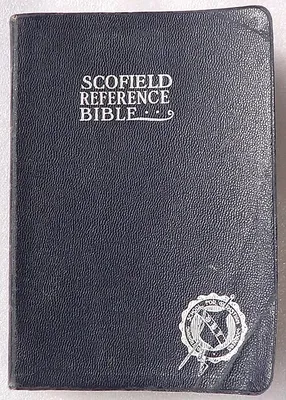
The Scofield Reference Bible popularized dispensationalism and biblical interpretation through extensive annotations.
The Scofield Reference Bible, edited by Cyrus I. Scofield and published by Oxford University Press, is a significant study Bible that played a key role in popularizing dispensationalism in the early 20th century. First released in 1909 with the King James Version text, it was revised by Scofield in 1917. A key innovation was its integrated commentary and cross-referencing system, which allowed readers to follow biblical themes across different passages and books. The 1917 edition also included attempts to date biblical events, notably mentioning Archbishop Ussher's calculation of Creation and introducing the "gap theory" related to biblical chronology. This approach sparked internal debates within fundamentalist circles regarding the nature and timeline of creation. Later editions, including revisions and translations into other languages, continued to be published, with the 1917 edition remaining a consistent bestseller in some regions. The work has faced criticism for its authoritative tone in interpretation and its focus on eschatology. Its influence extended to the Christian Zionist movement and shaped popular eschatological speculation.
Innovative Features and Interpretation
The Scofield Reference Bible introduced several novel features for study Bibles. Most notably, it incorporated a commentary directly alongside the biblical text, a departure from separate commentary volumes and a practice not seen in English Bibles since the Geneva Bible of 1560. It also featured an extensive system of "chain references," enabling readers to trace interconnected verses and follow thematic threads throughout Scripture. The 1917 revision further distinguished itself by attempting to assign chronological dates to biblical events. This edition brought Archbishop James Ussher's calculation of Creation in 4004 BC to a wider audience and, through Scofield's notes advocating the "gap theory," stimulated significant discussion among fundamentalists about creation's timeline and nature.
Influence and Legacy
Published shortly before World War I, the Scofield Reference Bible's dispensationalist framework, which posits distinct eras in God's dealings with humanity, gained prominence. Its premillennialist outlook appeared prescient to many in the post-World War II era, particularly with the establishment of a Jewish homeland in Palestine. This perception led to the dispensational scheme being widely accepted as vindicated. By the end of World War II, sales had surpassed two million copies. Scofield's notes became a foundational source for popular religious writers focusing on eschatology and significantly influenced the Christian Zionist movement, with specific interpretations of Genesis being used to support theological stances on Israel.
Later Editions and Criticism
The 1917 edition's notes are now in the public domain and continue to be the best-selling version in certain territories. Oxford University Press has released subsequent revisions, including a 1967 edition that slightly modernized the text and moderated some of Scofield's theological points, with later editions placing these textual alterations in the margin. The work has also been translated into multiple languages and its notes have been adapted to accompany various English translations in the 21st century. However, the Scofield Bible has drawn criticism from those opposing biblical fundamentalism, who cite its perceived absolute authority in interpretation, its handling of biblical contradictions, and its strong emphasis on end times.
Key Ideas
- Dispensationalism: A theological framework viewing history as divided into distinct eras of God's interaction with humanity.
- Chain References: A system of cross-referencing verses to trace biblical themes and connections throughout Scripture.
- Gap Theory: An interpretation suggesting a temporal gap between the creation of the heavens and the earth and the subsequent creation events.
Books by American Bible Society
1 free public domain book · Read online or download