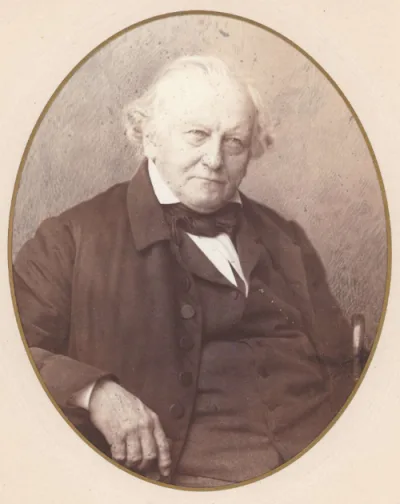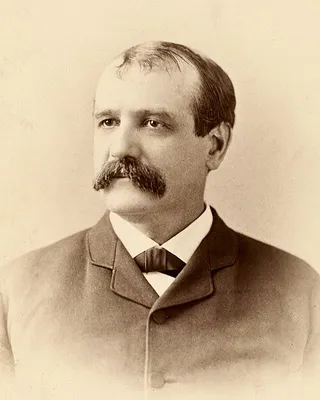
Amasa Walker
Francis Amasa Walker was an American economist, statistician, and educator known for his work on wages and bimetallism.
Francis Amasa Walker, born in 1840, was a distinguished American economist, statistician, and educator who also served as an officer in the Union Army. He held a prominent position as the third president of the Massachusetts Institute of Technology (MIT) until his death in 1897. Walker made significant contributions to economic and statistical theory, particularly in the areas of wages, wealth distribution, and monetary policy, advocating for international bimetallism. His work aimed to modernize and broaden economic thought.
Walker's early life included a strong academic background, graduating from Amherst College. His military service during the Civil War saw him rise through the ranks and endure capture and imprisonment. After the war, he transitioned into public service and academia, holding positions such as chief of the Bureau of Statistics and superintendent of the 1870 census, where he produced an award-winning Statistical Atlas. He later became a professor at Yale University and held numerous leadership roles in prominent academic and statistical organizations.
As an economist, Walker challenged existing theories, notably the wage-fund doctrine, and engaged in debates on economic principles. He was a prolific author, publishing ten books. His influence extended to MIT, where he served as president for fifteen years, implementing significant reforms and expanding the institution. Despite his academic achievements, his legacy is complicated by documented anti-immigration and white supremacist views.
Economic and Statistical Contributions
Francis Amasa Walker was a leading figure in American economics and statistics. He is recognized for modernizing and expanding economic theory, with notable contributions to understanding wages, the distribution of wealth, and monetary systems. Walker is particularly credited with developing the "residual theory of wage distribution," which offered a new perspective on how wages are determined. He was a strong proponent of bimetallism, advocating for an international agreement to support a monetary system based on both gold and silver. His scholarly work aimed to liberalize and broaden the scope of economic and statistical analysis, influencing subsequent generations of thinkers in these fields.
Academic Leadership and Public Service
Beyond his scholarly work, Walker played a significant role in academic administration and public life. He served as the president of the Massachusetts Institute of Technology (MIT) for fifteen years, leading the institution through a period of growth and reform. During his tenure, he focused on financial stability, curricular innovation, and expansion of programs and facilities. Before his time at MIT, Walker held important positions in government statistics, including the chief of the Bureau of Statistics and superintendent of the 1870 census, where his "Statistical Atlas" received acclaim. He also held leadership roles in organizations like the American Statistical Association and the American Economic Association, solidifying his reputation as a national expert.
Civil War Service and Personal Background
Walker's life was marked by significant experiences beyond academia and economics. He was born in Boston in 1840 into a notable family, with his father also being an economist and politician. He graduated from Amherst College and entered military service during the American Civil War. He served with distinction in the Union Army, participating in major campaigns and rising to the rank of brevet brigadier general. His military career was interrupted by injury and capture, leading to his imprisonment in Libby Prison. This period of service profoundly shaped his life and likely influenced his later perspectives.
Key Ideas
- Advocacy for international bimetallism
- Development of the residual theory of wage distribution
- Debunking of the wage-fund doctrine
Books by Amasa Walker
1 free public domain book · Read online or download