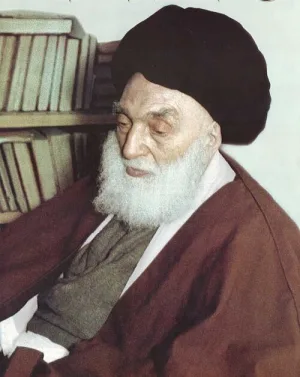
Allama Muhammad Husayn Tabatabai
Allama Muhammad Husayn Tabatabai was a prominent 20th-century Iranian philosopher and Shia scholar.
Allama Muhammad Husayn Tabatabai was a highly influential Iranian philosopher and Shia Islamic scholar of the 20th century. His work significantly contributed to Islamic philosophy, particularly within the Shia tradition. He engaged with complex philosophical and theological issues, drawing upon both classical Islamic thought and contemporary philosophical discourse.
Tabatabai's intellectual legacy is marked by his deep understanding of Quranic exegesis, Hadith, jurisprudence, and Islamic philosophy. He sought to synthesize these diverse fields, presenting a comprehensive vision of Islamic thought relevant to modern times. His writings and teachings have inspired generations of scholars and continue to be studied for their depth and insight into Islamic intellectual history.
Intellectual Context
Islamic philosophy, a tradition deeply rooted in the Arabic language and Islamic thought, emerged through extensive engagement with Ancient Greek philosophy, particularly the works of Aristotle. Early figures like Al-Kindi established the peripatetic tradition, while al-Farabi introduced key themes and advanced logical studies. The 11th century saw Ibn Sina develop Avicennism, a school with strong Neoplatonist and Aristotelian foundations. Al-Ghazali critically examined the relationship between reason and revelation, accepting certain philosophical methods like demonstration, which refined epistemological discourse and fostered Aristotelian logic and metaphysics within theological circles. Averroes, a later peripatetic philosopher, defended Aristotelianism through his commentaries.
Later Developments and Mystical Philosophy
Following the peak of Aristotelian philosophy in the Arab world, mystical forms of philosophy gained prominence after the 12th century. In the eastern Islamic world, the Safavid Empire witnessed a continuation of the peripatetic school, known as the School of Isfahan, founded by Mir Damad and further developed by Mulla Sadra. This period demonstrates a dynamic evolution within Islamic philosophical thought, where traditional rationalist approaches intertwined with, and sometimes gave way to, more mystical and spiritual orientations, reflecting a broader intellectual landscape that embraced diverse philosophical currents.
Books by Allama Muhammad Husayn Tabatabai
1 free public domain book · Read online or download
![Bidayah al-Hikmah (Arab-English) [The Elements of Islamic Metaphysics]](/img/thumb/bidayah-al-hikmah-arab-english-the-elements-of-islamic-metaphysics-allama-muhammad-husayn-tabatabai.webp)