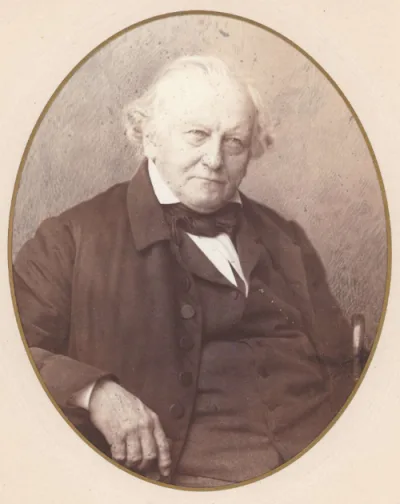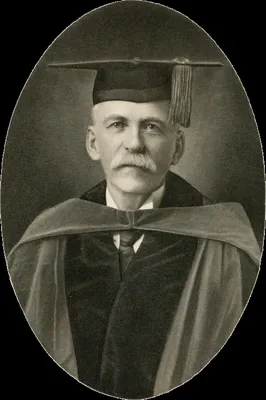
Alison Gardiner
Lyon Gardiner Tyler Sr. was an educator, historian, and president of the College of William & Mary, known for his historical research and controversial views.
Lyon Gardiner Tyler Sr. (1853–1935) was an American educator, politician, genealogist, and historian, and the 17th president of the College of William & Mary. As the son of President John Tyler, he was deeply involved in Virginian history and preservation efforts. Tyler served in the Virginia House of Delegates and was instrumental in securing funding to reopen the College of William & Mary, where he later served as president for over three decades. During his tenure, he expanded the college, advocated for women's suffrage, and established the William and Mary Quarterly. He was a prolific author and a dedicated advocate for preserving historical records, particularly those related to Virginia's past. His historical philosophy emphasized the public interest derived from ancestry. In his later years, Tyler became a prominent critic of Abraham Lincoln, publishing numerous articles that argued against Lincoln's historical standing and defended the Confederate cause, notably in his pamphlet 'A Confederate Catechism'.
Early Life and Education
Born at Sherwood Forest Plantation in Charles City County, Virginia, Lyon Gardiner Tyler Sr. was the son of President John Tyler and Julia Gardiner Tyler. His father, a slaveholder and secessionist, died when Lyon was eight. Following the Civil War, his mother moved the family north, but Tyler returned to Virginia to complete his education at the University of Virginia. He earned both bachelor's and law degrees, graduating in 1875. During his time at the university, he was involved in campus societies and contributed to the literary magazine.
Educational and Political Career
After graduating, Tyler briefly taught at the College of William & Mary before moving to Memphis, Tennessee, to work as a school principal. He returned to Virginia in 1882 to practice law and began compiling "The Letters and Times of the Tylers," a multi-volume study of his father and grandfather. Tyler was also a proponent of educational reform and helped revive the Virginia Mechanics Institute. In 1887, he was elected to the Virginia House of Delegates, where he championed the restoration of funding for the College of William & Mary. This advocacy led to the college's reopening in 1888, and he was subsequently appointed its president.
Presidency of William & Mary and Historical Preservation
As president of the College of William & Mary from 1888 to 1919, Tyler significantly restored the institution's finances and infrastructure, overseeing its growth to over 200 students and fourteen faculty members. He also chaired the history department, co-founded the "Seven Wise Men" group, and launched the William and Mary Quarterly. Tyler supported women's suffrage and the college began admitting women during his final year. He developed a deep interest in Virginia history, dedicating himself to researching and preserving local records, persuading the state legislature to fund the copying of 17th-century court documents. He was appointed to the State Library Board and served for many years on the executive committee of the Virginia Historical Society.
Later Views and Criticism of Lincoln
In his later years, Tyler gained notoriety for his strong criticisms of President Abraham Lincoln. He argued that Lincoln opposed the self-determination of Confederate states, likening him to Prussian nobility. After retiring from William & Mary in 1919, he continued to voice his opposition to Lincoln, publishing articles in "Tyler's Quarterly and Genealogical Magazine." He contended that Lincoln was not a hero and did not warrant honors, famously publishing a pamphlet titled "A Confederate Catechism" which argued that the anti-slavery movement, rather than slavery itself, was the root cause of the Civil War. This pamphlet was promoted by Confederate heritage organizations.
Key Ideas
- Emphasis on historical preservation, particularly of Virginia's records.
- Belief that ancestry is of public interest only as it reflects credit upon descendants.
- Strong criticism of Abraham Lincoln and defense of Confederate states' rights.
- Argument that the anti-slavery movement, not slavery, was the primary cause of the Civil War.
Notable Quotes
“Ancestry is only of public interest as it reflects credit upon descendants”
“Both from the standpoint of the Constitution and sound statesmanship, it was not slavery, but the vindictive, intemperate anti-slavery movement that was at the bottom of all the troubles.”
Books by Alison Gardiner
1 free public domain book · Read online or download