Alireza Doostdar
The MEK is an Iranian dissident group founded in 1965, evolving from armed struggle to political activism, with a complex ideology blending Islam and revolutionary Marxism.
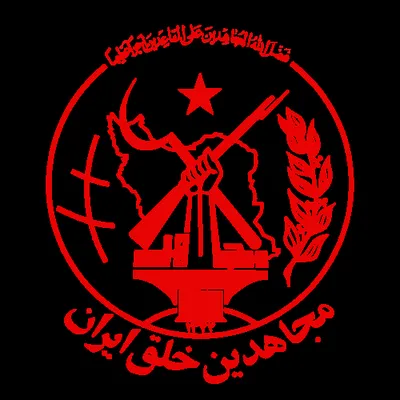
The People's Mojahedin Organization of Iran (PMOI), also known as MEK, emerged in 1965 from leftist Iranian students opposing the Shah. Initially influenced by Islam and revolutionary Marxism, the group sought to establish its own government after the 1979 revolution, positioning itself as a major opposition force. However, internal divisions and ideological shifts occurred, including a Marxist-Leninist faction that eventually became Peykar. The MEK faced severe repression from the Islamic Republic, leading its leadership into exile. The organization engaged in armed conflict, notably siding with Iraq during the Iran-Iraq War, which significantly damaged its popularity within Iran. While it transitioned from an armed group to a political one after 2003, and its headquarters are now in Albania, the MEK has been designated as a terrorist organization by Iran and was on similar lists in several Western countries for periods between 1997 and 2013. Despite its controversial history and current unpopularity in Iran, it is still presented by some Western backers as a key opposition movement.
Ideological Foundations and Early Development
Founded in 1965 by students who found the mainstream Freedom Movement too moderate, the MEK aimed to create a socialist state in Iran. Their ideology was a unique synthesis of Islamic principles, drawing inspiration from texts like Nahj al-Balagha and the writings of Ali Shariati, combined with revolutionary Marxist thought. This blend represented a reinterpretation of Shia Islam shaped by modern political and social theories. The organization initially focused on ideological development and attracted young, educated Iranians. However, internal ideological struggles emerged by the 1970s, leading to a significant schism by 1975. A faction embraced Marxism-Leninism, asserting it as the true revolutionary philosophy, while the other maintained its Islamic foundation. This division resulted in two rival factions, with the Marxist offshoot eventually renaming itself Peykar.
Revolutionary Activities and Post-Revolutionary Conflict
The MEK played a role in opposing the Shah and contributed to the 1979 Iranian Revolution. Following the revolution, the organization sought to establish a democratic government and gained support from the intelligentsia. However, conflict with Ruhollah Khomeini's emerging theocratic regime quickly ensued. The MEK boycotted the 1979 constitutional referendum, which led to their leader, Massoud Rajavi, being barred from the 1980 presidential election. In June 1981, a demonstration organized by the MEK against Khomeini and the ousting of President Banisadr was violently suppressed, resulting in numerous deaths. The group was also implicated in the bombing of the Islamic Republican Party headquarters shortly after. Facing intense repression, the MEK's leadership went into exile, and the organization continued to conduct attacks, reportedly claiming responsibility for assassinations of Iranian officials.
Exile, Military Operations, and Shifting Status
During their exile, the MEK relocated to Iraq in 1986. There, they formed the "National Liberation Army of Iran" (NLA) with the explicit goal of overthrowing the Islamic Republic militarily from abroad. The MEK notably sided with Iraq during the Iran-Iraq War, participating in military operations against Iran. This alliance proved deeply unpopular within Iran, significantly contributing to the group's current lack of support there. Following the war, the MEK gained international attention in 2002 for revealing information about Iran's nuclear facilities. In 2003, their military wing signed a ceasefire with the U.S. and was disarmed. The group's designation as a terrorist organization varied among international bodies; it was listed as such by the US, Canada, the EU, UK, and Japan for different periods between 1997 and 2013, while Iran officially designates it as a terrorist entity.
Key Ideas
- Reinterpretation of Shia Islam influenced by revolutionary Marxism.
- Establishment of a socialist state in Iran.
- Opposition to the Shah and later the Islamic Republic of Iran.
Books by Alireza Doostdar
1 free public domain book · Read online or download