Alice Rose Morgan
Alice's Adventures in Wonderland is a seminal children's novel by Lewis Carroll, celebrated for its literary nonsense and enduring cultural impact.
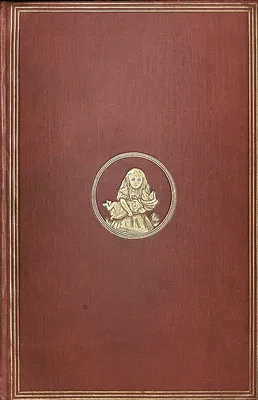
Published in 1865, Alice's Adventures in Wonderland, by Lewis Carroll, chronicles a young girl's descent into a fantastical realm populated by peculiar, anthropomorphic beings. This work is widely recognized as a prime example of the literary nonsense genre. The original edition featured 42 wood-engraved illustrations by John Tenniel, which significantly contributed to its reception.
Upon its release, the novel garnered positive reviews and has since become a cornerstone of Victorian literature. Its innovative narrative, structure, characters, and imagery have profoundly influenced popular culture, particularly within the fantasy genre. The book is credited with shifting children's literature away from didacticism towards entertainment, aiming to "delight or entertain." Its playful engagement with logic has ensured its lasting appeal to both younger and adult readers.
The novel has remained continuously in print and has been translated into numerous languages. Its legacy extends to various adaptations across different media, including film, theatre, and games. Carroll also penned a sequel, Through the Looking-Glass, and a simplified version for younger audiences, The Nursery "Alice".
Origins of the Tale
The genesis of Alice's Adventures in Wonderland can be traced to a boat trip on July 4, 1862, on the river Isis. Lewis Carroll, accompanied by the Reverend Robinson Duckworth, took the three daughters of his friend Henry Liddell—Lorina, Alice, and Edith—on an excursion. During this journey, Carroll recounted a story he called "Alice's Adventures Under Ground." Alice Liddell specifically requested that he write it down, a desire that led to the manuscript being delivered to her over two years later. The day itself, referred to as a "golden afternoon" in the book's preface, has been subject to scholarly debate regarding the actual weather conditions and the precise moment of the story's conception.
Development and Illustration
Carroll began writing the manuscript the day after the pivotal boat trip, though this initial version is now lost. He continued to develop the story, researching natural history for accuracy concerning the depicted animals and even testing the narrative on the children of George MacDonald. For the published version, Carroll was advised to engage a professional illustrator. He enlisted John Tenniel, a cartoonist for Punch, to reinterpret his story through his distinctive artistic style. The manuscript of "Alice's Adventures Under Ground," featuring Carroll's own illustrations, was eventually presented to Alice Liddell as a Christmas gift in 1864. The published "Alice's Adventures in Wonderland" significantly expanded upon the manuscript, incorporating new episodes like the Mad Hatter's Tea-Party.
Literary Significance and Impact
Alice's Adventures in Wonderland is lauded for its contribution to the literary nonsense genre, challenging conventional storytelling with its playful manipulation of logic and language. It is credited with ushering in an era of children's literature focused on amusement rather than moral instruction. The book's enduring popularity stems from its ability to engage readers of all ages, offering layers of meaning that resonate beyond a simple children's tale. Its influence is evident in its continuous publication, widespread translation, and numerous adaptations across various artistic and entertainment platforms, solidifying its status as a cultural touchstone.
Key Ideas
- Literary Nonsense
- Shift from didacticism to entertainment in children's literature
- Exploration of logic and identity
Notable Quotes
“"Alice's Adventures Under Ground"”
“"A Christmas Gift to a Dear Child in Memory of a Summer's Day"”
“"Why is a raven like a writing desk?"”
“"It's the stupidest tea-party I ever was at in all my life!"”
Books by Alice Rose Morgan
1 free public domain book · Read online or download