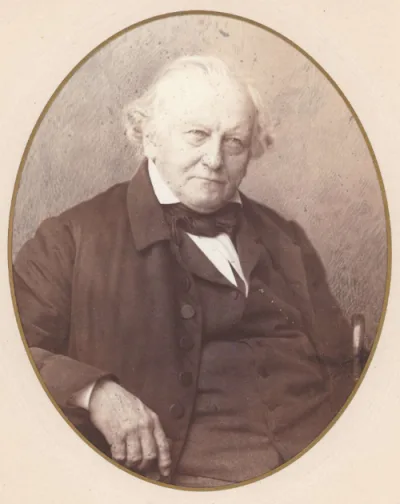
✍️ Author Biography
Alfred Romer
📅 1750 – 1802
🌍 American
📚 1 free book
⭐ Known for: Mrs. Leslie and her Grandchildren (1827)
Isabella Frances Romer was an English novelist and travel writer known for her accounts of journeys and her fictional exploration of mesmerism.
Isabella Frances Romer, born in London in 1798, was an English author who gained recognition for her travel writings and her novel exploring mesmerism. She was the eldest child of Brigadier-General John William Augustus Romer and Mary Ann Cuthbert. After marrying Major William Medows Hamerton in 1818, she had one daughter. The couple separated in 1827 due to her adultery, after which she reverted to her maiden name and lived abroad. Hamerton obtained a divorce from her in 1830. Romer's literary career began under the name "Mrs. Hamerton" with a work published in 1827, though this was distinct from a work attributed to another "Mrs. Hamerton." She later published extensively as "Mrs. Romer," focusing on her travels in regions like the Rhone, Guadalquivir, Egypt, Nubia, and Palestine. Her travelogues often cautioned about the rigors of journeys for women, particularly in the Middle East. Romer also wrote fiction, including "Sturmer: a Tale of Mesmerism," which aimed to highlight the potential dangers of mesmerism. She contributed to various periodicals and was working on a biography that was completed posthumously. Described as a "shrewd, lively, mystery-loving" writer, she died of cancer in London in 1852.
Travel and Observation
Under the name "Mrs. Romer," Isabella Frances Romer established a reputation primarily as a travel writer. Her notable works in this genre include "A Summer Ramble in 1842," "A Pilgrimage to the Temples and Tombs of Egypt, Nubia and Palestine in 1845–6," and "The Bird of Passage, or, Flying Glimpses of Many Lands." The latter comprised short narratives set in Eastern Europe and the Middle East. While she encouraged women to undertake physical travel, especially to the Middle East, Romer also offered stern warnings about the demanding nature of such journeys. She emphasized that travel in these regions was not suited for delicate females, detailing the lack of comforts, the need to endure harsh roads and tents, and the reliance on one's own constitution in case of illness or accident, as medical assistance and shelter were scarce.
Exploration of Mesmerism
Romer's literary output included fictional works that delved into controversial subjects of her time. Her first novel, "Sturmer: a Tale of Mesmerism," published in 1841, offered a fictionalized exploration of mesmerism, also known as animal magnetism. Having traveled extensively in France and Germany, Romer became convinced of the phenomena associated with mesmerism. A significant objective in writing this novel was to inform readers about the potential perils of this powerful practice when placed in the wrong hands. She also contributed sketches and short stories to periodicals such as Bentley's Miscellany and Henry Colburn's New Monthly Magazine.
Literary Persona and Appraisal
Initially publishing as "Mrs. Hamerton" in 1827 with "Mrs. Leslie and her Grandchildren," Romer later adopted the name "Mrs. Romer" for her travel writings and other works. This distinction from any other author using the "Mrs. Hamerton" pseudonym was clarified in contemporary accounts. A writer named Richard Robert Madden described her as an "occasional authoress" who was shrewd, lively, and fond of mysteries, though sometimes prone to extensive personal reflections. He noted that her writing, while occasionally showing minor personal digressions, was consistently redeemed by vivid and engaging descriptions. Madden characterized her depictions of Palestine as more spirited than spiritual.
Key Ideas
- The potential dangers of mesmerism when misused.
- The rigorous and often perilous nature of travel for women, particularly in the Middle East.
- Encouragement of physical travel for English women.
Notable Quotes
“I think that tourists in general have heretofore made too light of the perils of travelling in this country, and that many lives may be sacrificed to their accidental or intentional carelessness in disguising facts. Syria, in its actual state, is indeed no country for a delicate woman to travel in. All the wealth in the world, all the precautions possible, will not procure for her those auxiliaries to comfort which custom has rendered necessary for her well-being. She must forget that such things as carriages and carriage-roads exist; she must ride all day over execrable roads and under a burning sun; she must sleep at night in a tent, which is either the hottest or the coldest of all shelters; and if fever or accident overtake her on her way, she must trust in God and her own constitution to help her through, for neither physician nor apothecary, nor a roof to shelter her suffering head, will be forthcoming, even should thousands be offered for them.”