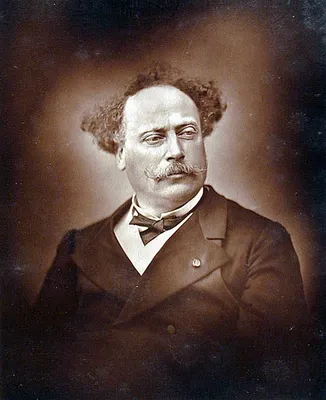
Alexandre Dumas
Alexandre Dumas fils, son of the famous author, penned "The Lady of the Camellias," a highly influential romantic novel adapted into opera and stage plays.
Alexandre Dumas fils (1824–1895) was a prominent French author and playwright, most celebrated for his 1848 novel, "La Dame aux Camélias." This work, often known in English as "The Lady of the Camellias" or "Camille," gained widespread recognition when it was adapted into Giuseppe Verdi's opera "La Traviata" in 1853 and has since been featured in numerous theatrical and film productions.
Dumas fils was the son of Alexandre Dumas père, the renowned author of "The Three Musketeers" and "The Count of Monte Cristo." His own life experiences, including his status as an illegitimate child and the societal challenges he faced, significantly shaped his writing. He often explored themes of morality and the consequences of societal norms, particularly concerning illegitimacy. His literary career saw him achieve considerable fame during his lifetime, even surpassing his father's renown, and he became a dominant figure in 19th-century French theatre. He was recognized for his contributions to literature and the arts, being admitted to the Académie française in 1874 and awarded the Légion d'honneur in 1894.
Literary and Theatrical Career
Alexandre Dumas fils established himself as a leading figure in 19th-century French literature and drama. While he authored several novels, including "Césarine" and "L'Affaire Clémenceau," his most enduring contribution remains "La Dame aux Camélias." Originally published in 1848, this novel's success paved the way for its adaptation into a play, which then served as the foundation for Verdi's celebrated opera, "La Traviata." This transition marked a significant shift in Dumas fils' career, leading him to focus primarily on playwriting. His dramatic works, such as "Diane de Lys," "Le Filleul de Pompignac," and "Denise," dominated the French stage for decades, earning him substantial critical acclaim and public recognition.
Personal Life and Thematic Influences
Born in Paris, Dumas fils was the illegitimate son of novelist Alexandre Dumas and Marie-Laure-Catherine Labay. His father's legal recognition and subsequent education provided him with opportunities, but his early life was marked by the societal stigma of illegitimacy, a theme that profoundly influenced his writing. He often used his literary works to advocate for moral purpose, particularly in his play "Le Fils naturel" (The Illegitimate Son), where he argued for the societal obligation to legitimize children born out of wedlock. His personal relationships also inspired his writing; his affair with Marie Duplessis, a courtesan, directly led to the creation of "La Dame aux Camélias," with Duplessis serving as the model for the novel's protagonist, Marguerite Gauthier.
Legacy and Recognition
Dumas fils achieved a level of fame during his lifetime that often eclipsed that of his famous father. His dominance on the French theatrical scene solidified his reputation as a significant cultural figure. His admission to the prestigious Académie française in 1874 and his award of the Légion d'honneur in 1894 were testaments to his lasting impact on French arts and letters. The enduring popularity of "La Dame aux Camélias," through its various adaptations, continues to be a significant part of his legacy, influencing subsequent literary and operatic works.
Key Ideas
- The moral purpose of literature
- Societal obligations regarding illegitimacy
- Exploration of tragic female characters
- Influence of personal experience on artistic creation
Books by Alexandre Dumas
2 free public domain books · Read online or download