Alchemy Chemie
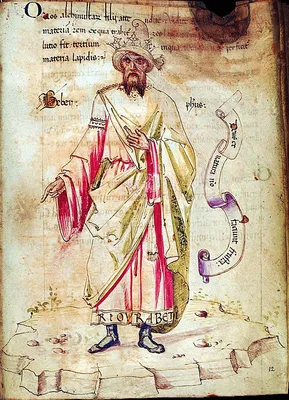
Jabir ibn Hayyan is the attributed author of a vast corpus on alchemy and chemistry, though his historical existence and sole authorship are debated.
Abū Mūsā Jābir ibn Ḥayyān, also known by various epithets, is credited as the author of a substantial collection of Arabic works, referred to as the Jabirian corpus. While these surviving treatises primarily focus on alchemy, chemistry, magic, and Shi'ite religious philosophy, the original scope of his writings was far broader, encompassing cosmology, medicine, metaphysics, and more. The works attributed to Jabir, dating roughly from the mid-9th to mid-10th centuries, contain significant early contributions to chemistry, including systematic classifications of substances and methods for producing inorganic compounds. They also introduced the influential sulfur-mercury theory of metals and explored a philosophical concept known as 'the science of the balance'.
However, the historical reality of Jabir ibn Hayyan and the authenticity of these numerous works have been subjects of scholarly debate since the 10th century. Modern scholarship suggests that 'Jabir ibn Hayyan' may have been a pseudonym used by a school of anonymous Shi'ite alchemists active in the late 9th and early 10th centuries. Despite the uncertainty surrounding his individual existence, the Jabirian corpus represents a foundational body of knowledge in early Islamic science and esotericism, with some works being translated into Latin and influencing European alchemy.
Authorship and Historical Debate
The figure of Abū Mūsā Jābir ibn Ḥayyān is associated with a vast body of Arabic literature, known as the Jabirian corpus, comprising around 600 named works, with about 215 still extant. These writings, primarily on alchemy and chemistry, also touch upon magic and Shi'ite philosophy. However, the very existence of a single historical Jabir ibn Hayyan and his sole authorship of this extensive corpus are questioned by modern scholars. Evidence suggests that the name 'Jabir ibn Hayyan' might have been a pseudonym adopted by an anonymous school of Shi'ite alchemists during the late 9th and early 10th centuries. This debate dates back to the 10th century, with contemporary scholars already disputing the authenticity of the attributed works and even the existence of the author.
Contributions to Early Chemistry and Philosophy
The Jabirian corpus contains some of the earliest systematic classifications of chemical substances and provides the first known instructions for chemically deriving inorganic compounds from organic materials. His writings are also credited with presenting an early version of the sulfur-mercury theory of metals, a concept that profoundly influenced metallurgical thought until the 18th century. Furthermore, a significant portion of Jabir's work delves into 'the science of the balance' (ʿilm al-mīzān), a philosophical framework aiming to quantify and systematize all phenomena through measurement and proportion. The corpus also preserves early Shi'ite imamological doctrines, presented as teachings from his supposed master, the Shi'ite Imam Jaʿfar al-Ṣādiq.
Esoteric and Mystical Dimensions
Beyond the scientific and chemical aspects, the Jabirian corpus engages with esoteric themes, including magic, specifically 'the science of talismans' (ʿilm al-ṭilasmāt), a form of theurgy, and 'the science of specific properties' (ʿilm al-khawāṣṣ). This latter science investigates the hidden powers within minerals, plants, and animals for practical applications, particularly in medicine. The integration of Shi'ite religious philosophy and doctrines within the alchemical and scientific treatises suggests a worldview where spiritual and material realms were deeply interconnected, with alchemical processes potentially holding mystical or transformative significance.
Key Ideas
- The sulfur-mercury theory of metals
- The science of the balance (ʿilm al-mīzān)
- The science of talismans (ʿilm al-ṭilasmāt)
- The science of specific properties (ʿilm al-khawāṣṣ)
Books by Alchemy Chemie
1 free public domain book · Read online or download