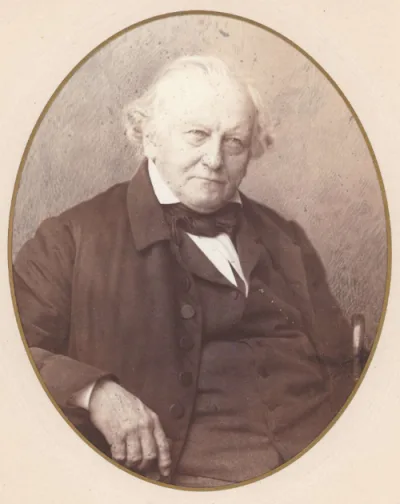
✍️ Author Biography
Alan William Rudrum
📅 1916 – 1918
🌍 English
📚 1 free book
⭐ Known for: Poems, with the Tenth Satire of Juvenal En...
Henry Vaughan was a Welsh metaphysical poet and physician known for his deeply religious verse, particularly Silex Scintillans.
Henry Vaughan (1621–1695) was a Welsh poet and physician recognized for his metaphysical and religious poetry. Initially publishing secular verse, including "Poems, with the Tenth Satire of Juvenal Englished" (1646), Vaughan experienced a profound spiritual transformation, influenced by the poet George Herbert. This led him to renounce "idle verse" and focus on religious themes, producing his acclaimed work "Silex Scintillans" in two parts (1650, 1655). His prose works, such as "The Mount of Olives" (1652), further explored his deep religious convictions.
Born in Brecknockshire, Vaughan came from a notable Welsh family and shared ancestry with prominent figures. He and his twin brother, Thomas, a philosopher and alchemist, received their education under Matthew Herbert. Both brothers attended Jesus College, Oxford, though Henry's exact matriculation dates are debated. The turbulent period of the English Civil War saw Vaughan recalled home, serving briefly as a secretary and possibly in the Royalist army before returning to his medical practice. He married twice, first to Catherine Wise and then to her sister Elizabeth.
Vaughan adopted the pseudonym "Silurist," derived from the ancient Celtic tribe of south Wales, reflecting his deep connection to his homeland. While his earlier work "Olor Iscanus" (published 1651) explored secular themes and alluded to the Civil War's impact, "Silex Scintillans" marked his significant spiritual and literary shift. He viewed his illness and recovery around 1650 as a divine intervention, prompting a new direction in his life and writing, which he described as a "conversion."
Early Life and Education
Henry Vaughan was born in Llansantffraed, Brecknockshire, to Thomas Vaughan and Denise Jenkin. He had a twin brother, Thomas Vaughan, who became known as a philosopher and alchemist. Vaughan's family had ties to both Catholic and Protestant gentry, and his paternal grandmother's lineage connected him to Thomas Somerset, who faced imprisonment for his Catholic faith. This background may have influenced his early spiritual development. Vaughan and his brother were educated by Matthew Herbert, Rector of Llangattock, an Anglican clergyman who later suffered persecution during the Interregnum. Both brothers are believed to have attended Jesus College, Oxford, around 1638, though precise records for Henry are uncertain. His early poetry, such as that included in "Poems, with the Tenth Satire of Juvenal Englished" (1646), celebrated Royalist ideals and demonstrated an engagement with contemporary literary figures like William Cartwright.
Secular Works and "Silurist"
Adopting the name "Silurist," derived from the ancient Celtic tribe of south Wales, Vaughan expressed a deep affection for his native landscape, particularly the mountains and River Usk valley. His secular work "Olor Iscanus" (published 1651), written around 1647, reflected the impact of the English Civil War on his homeland and community, though no major battles occurred there. The work's publication was delayed, possibly due to personal crises, including the death of his grandfather and eviction from his home. Vaughan later expressed dissatisfaction with "Olor Iscanus," condemning its poems to obscurity. The work contains translations from classical authors like Ovid and Boethius, and its themes touch upon debt and worldly life, contrasting with his later religious focus. The poems reveal a complex attitude towards the war, expressing a desire to be free of "innocent blood" while also hinting at military involvement and a general disillusionment with prevailing authorities.
Spiritual Conversion and Sacred Poetry
Vaughan achieved significant recognition with "Silex Scintillans," a collection of religious poetry published in two parts (1650 and 1655). The period leading up to its publication marked a critical turning point, influenced by a severe illness that Vaughan interpreted as a brush with death and a call to repentance. He credited George Herbert significantly for his spiritual awakening and literary direction, viewing himself as one of Herbert's "pious converts." This transformation led Vaughan to adopt the motto "Moriendo, revixi" (by dying, I gain new life) around 1650. His prose work "The Mount of Olives, or Solitary Devotions" (1652) served as a companion to the Book of Common Prayer and delved into prayer and spiritual reflection. He also translated religious and moral works, including those by Juan Eusebio Nieremberg, and engaged with medical texts, such as Henry Nollius's "Hermetical Physick."
Key Ideas
- Spiritual transformation and repentance.
- The influence of George Herbert on religious poetry.
- The connection between physical suffering and spiritual awakening.
- Devotion to the Welsh homeland and landscape.
- The tension between secular and sacred themes in writing.
Notable Quotes
“idle verse”
“English is a Language the Author was not born to.”
“He made his first entry into Jesus College in Michaelmas term 1638, aged 17 years.”
“He did but see thee.”
“I did but see thee.”