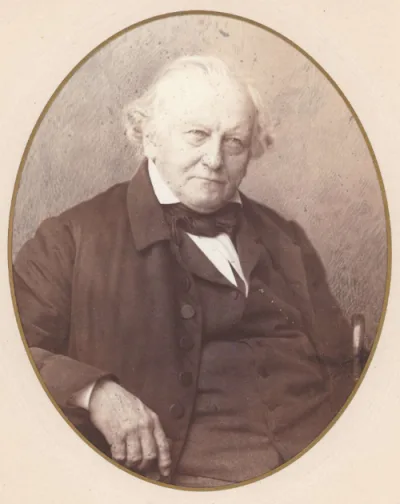
Agnieszka Kijewska
Nicholas of Cusa was a German bishop and polymath known for his philosophical ideas on 'learned ignorance' and mystical writings.
Nicholas of Cusa, born in Germany around 1401, was a significant figure in European culture, excelling as a philosopher, theologian, jurist, mathematician, and astronomer. He was an early proponent of Renaissance humanism, contributing to both spiritual and political spheres. His theological work explored the concept of 'learned ignorance,' suggesting that recognizing the limits of human understanding in comprehending the divine is a path to wisdom. Nicholas also engaged in political matters, particularly concerning the power dynamics between Rome and the German states within the Holy Roman Empire.
His career included appointments as a bishop and cardinal, and he served as a papal legate. Nicholas was involved in significant events such as the Council of Basel and the attempted union between the Eastern Orthodox and Western Catholic Churches in Florence. He was also a scholar who identified historical forgeries and advocated for calendar reform. Despite facing opposition and even imprisonment, Nicholas of Cusa left a lasting intellectual legacy, with his ideas continuing to be studied centuries after his death in 1464.
Learned Ignorance and Metaphysics
Nicholas of Cusa's philosophical treatise, 'De Docta Ignorantia' (Of Learned Ignorance), is central to his thought. In this work, he posits that the finite human mind cannot fully grasp the infinite divine. However, he argues that by acknowledging these limitations, the intellect can achieve a state of "learned ignorance." This epistemological approach draws from Neoplatonism and negative theology, frequently referencing Pseudo-Dionysius the Areopagite. His mystical writings explored the relationship between creation and God, suggesting an enfolding and unfolding dynamic. While some suspected him of pantheistic views, his writings were never formally condemned as heretical. He also explored the use of conjecture in 'De coniecturis' as a means to ascend towards a higher understanding of truth, acknowledging that individuals might fluctuate between rational thought and intellectual vision.
Scientific and Astronomical Contributions
Nicholas of Cusa's scientific and mathematical insights, often embedded within his philosophical works, demonstrated a departure from traditional doctrines. In astronomy, he proposed that the Earth was like other stars, not the center of the universe, and that it was in motion with unfixed poles. He also suggested that celestial bodies were not perfectly spherical and their orbits were not strictly circular, attributing perceived differences to relative motion. These ideas were speculative, often rooted in numerical symbolism and abstract reasoning rather than empirical observation, but they anticipated concepts later explored by Copernicus. Furthermore, Nicholas is credited with introducing a method for measuring the pulse rate by timing it against the flow of water, an early precursor to modern medical measurement techniques. He also contemplated the possibility of multiple worlds.
Ecclesiastical and Political Career
Beyond his intellectual pursuits, Nicholas of Cusa played a significant role in the church and politics of his era. He served as a bishop and cardinal, undertaking diplomatic missions and advocating for church reforms. His involvement in the Council of Basel showcased his skills as an intermediary and diplomat, where he authored 'De concordantia catholica,' a treatise on church and state relations. He participated in efforts to unite the Eastern Orthodox and Catholic Churches, traveling to Constantinople. As a papal legate to Germany, he aimed to implement reforms, though these efforts met with mixed success and considerable opposition, including his imprisonment by Duke Sigismund of Austria. Despite these challenges, he remained a respected figure, influencing European spiritual and political discourse.
Key Ideas
- Learned Ignorance (Docta Ignorantia): Recognizing the limits of human knowledge in understanding the divine.
- Coincidence of Opposites: A concept in his metaphysics where seemingly contradictory elements can unite in the absolute.
- Plurality of Worlds: Speculation on the existence of other worlds beyond Earth.
- Pulse Measurement: Introduction of a method to quantify pulse rate using water flow.
Books by Agnieszka Kijewska
2 free public domain books · Read online or download