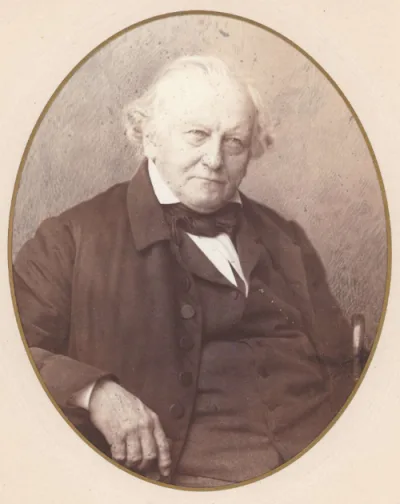
✍️ Author Biography
Adept
📅 1949 – 1953
🌍 American
📚 3 free books
⭐ Known for: An Essay Concerning Human Understanding (1690)
Children's literature evolved from oral traditions, with distinct works emerging as the concept of childhood developed, influenced by moral, religious, and philosophical ideas.
Children's literature, encompassing stories, books, and poems for young audiences, has roots in traditional oral narratives like fairy tales and songs shared across generations. While initially difficult to trace, its development accelerated with the advent of printing and a growing recognition of childhood as a distinct phase of life. Early works often served didactic or moralistic purposes, reflecting religious or philosophical influences such as Puritanism and the ideas of thinkers like John Locke. The concept of childhood as separate from adulthood began to solidify in Europe during the seventeenth century, leading to a more targeted creation of literature for children.
The eighteenth century marked a more defined emergence of children's literature as a genre, with early examples including educational books, conduct guides, and ABCs. The late nineteenth and early twentieth centuries are considered a "Golden Age" due to the publication of many classic children's books. The definition of children's literature remains fluid, sometimes blurring lines with adult works and encompassing a wide array of formats from picture books to poetry and drama, originating from both written traditions and oral storytelling.
Origins and Evolution
The origins of literature for children can be traced back to traditional oral storytelling, including fairy tales and songs, which adults shared with younger generations long before widespread printing. The concept of childhood as a distinct developmental stage began to emerge more clearly in Europe during the seventeenth century. This period saw adults increasingly viewing children as separate individuals requiring protection and guidance. Philosophical ideas, such as John Locke's theory of the mind as a "blank slate" (tabula rasa) presented in his 1690 work, emphasized the importance of parental influence and the use of "easy pleasant books" to nurture a child's mind. This marked a shift towards creating literature specifically designed to instruct and entertain children, moving beyond purely didactic or religious texts.
Didacticism and Moral Instruction
Early literature intended for children was heavily influenced by didactic and moralistic aims, serving to convey cultural values, religious lessons, and principles of conduct. Religious traditions, particularly Puritanism, played a significant role, leading to the publication of numerous "good godly books" focused on the spiritual welfare of children. Works like John Bunyan's "The Pilgrim's Progress" (1678) emerged from this movement and remain influential. Before the eighteenth century, much of the literature available to children, such as chapbooks and hornbooks, often contained instructional content like alphabets, prayers, and moral tales, alongside folk stories and ballads. While not always exclusively for children, these inexpensive booklets were widely enjoyed by young people and helped preserve narrative traditions.
Emergence of a Distinct Genre
The eighteenth century witnessed the more formal emergence of children's literature as a distinct genre, characterized by specific expectations and a growing canon. This period saw the development of early educational books, conduct manuals, and ABC primers, often featuring illustrations of animals and anthropomorphic letters. The concept of childhood, as explored by historians like Philippe Ariès, began to be understood as fundamentally different from adulthood, spurring the creation of literature tailored to this perceived difference. The late nineteenth and early twentieth centuries are recognized as a "Golden Age" of children's literature, marked by the publication of many enduring classic works that continue to be read and cherished.
Key Ideas
- Children's literature definition is not universally fixed.
- Literature for children evolved from oral traditions.
- The concept of childhood significantly influenced the development of children's literature.
- Early children's literature was often didactic and moralistic.
- John Locke's "tabula rasa" theory influenced educational approaches.
- The "Golden Age of Children's Literature" occurred in the late 19th and early 20th centuries.
Notable Quotes
“Children may be cozen'd into a knowledge of the letters; be taught to read, without perceiving it to be anything but a sport, and play themselves into that which others are whipp'd for.”
“This book presents a history of what children have heard and read.... The history I write of is a history of reception.”
“the boundaries of genre... are not fixed but blurred”
“all books written for children, excluding works such as comic books, joke books, cartoon books, and non-fiction works that are not intended to be read from front to back, such as dictionaries, encyclopedias, and other reference materials”
“Children's Literature studies has traditionally treated comics fitfully and superficially despite the importance of comics as a global phenomenon associated with children”