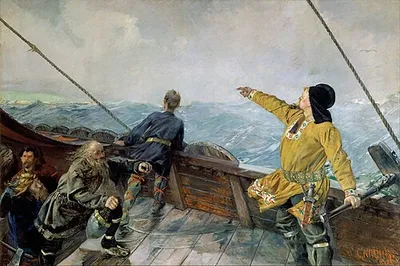
Adam of Bremen
Adam of Bremen was a German chronicler known for his historical work on the Hamburg church and northern lands.
Adam of Bremen was a German chronicler active in the latter half of the 11th century. Little is definitively known about his life, though he is thought to have originated from Meissen and likely received a higher education, possibly at the Magdeburger Domschule, indicated by his title "Magister Adam." He joined the service of Archbishop Adalbert of Hamburg-Bremen around 1066 or 1067 and by 1069 was leading the cathedral school in Bremen.
His most significant contribution is the "Gesta Hammaburgensis ecclesiae pontificum" (Deeds of Bishops of the Hamburg Church), a chronicle detailing the history of the Bremen/Hamburg church and the northern regions. His position and the church's missionary efforts provided him access to historical and geographical information about Northern Germany. Additionally, a period at the court of King Sweyn II of Denmark allowed him to gather insights into Danish and Scandinavian history and geography, including details about maritime routes.
Adam of Bremen is recognized as a notable historian and early ethnographer of the medieval era. His chronicle is historically significant for its inclusion of a chapter mentioning the Norse settlement of Vinland, making him the first European writer to document the "New World."
Historical and Ethnographic Contributions
Adam of Bremen is primarily recognized for his chronicle, "Gesta Hammaburgensis ecclesiae pontificum." This work serves as a vital historical account of the Archbishops of Hamburg-Bremen and the ecclesiastical history of the region. Beyond its religious focus, Adam's chronicle offers significant ethnographic and geographical information about Northern Europe. His role as a historian and early ethnographer during the medieval period is well-established. He meticulously documented the regions under his church's influence and expanded his knowledge through interactions with rulers and travel, providing valuable insights into the societies, customs, and landscapes of the time.
Early Account of Vinland
A particularly noteworthy aspect of Adam of Bremen's "Gesta Hammaburgensis ecclesiae pontificum" is its inclusion of information about Vinland. This chapter marks the first known European written record describing this Norse outpost. By detailing Vinland, Adam inadvertently became the earliest European author to document what would later be understood as the "New World." This inclusion provides a crucial historical link to early Norse exploration and their transatlantic voyages, predating later European discoveries and accounts of the Americas.
Life and Education
Details regarding Adam of Bremen's life are scarce, primarily gleaned from his own writings. He is believed to have been born before 1050 and died sometime after 1081, likely by 1085. His origins are thought to be in Meissen. The title "Magister Adam" suggests he possessed a comprehensive higher education, possibly at the Magdeburger Domschule. His academic background equipped him to undertake extensive historical and geographical research. He was invited to join the Church of Bremen around 1066-1067, where he eventually directed the cathedral school and began compiling his seminal work.
Books by Adam of Bremen
1 free public domain book · Read online or download