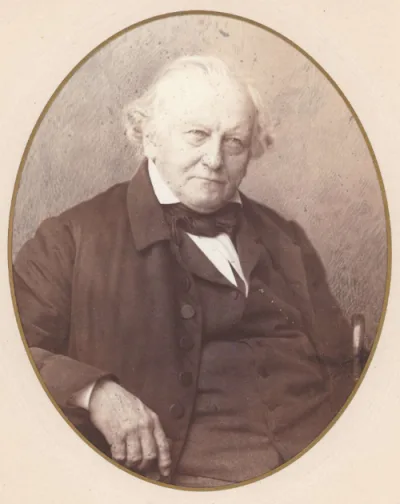
✍️ Author Biography
📚 1 free book
⭐ Known for: The Discovery of Witches (1648)
A FAQ, or Frequently Asked Question, is a structured list of answers to common inquiries, originating from early internet communication challenges.
A FAQ (Frequently Asked Question or Questions) is a compilation of questions and their corresponding answers, intended to clarify topics that are often poorly understood or unknown. While the name suggests questions that are frequently posed, the format primarily serves to organize information and address anticipated reader inquiries. The term itself has grammatical flexibility, allowing for different pronunciations (as a word or letters) and expansions (singular or plural 'question').
Historically, the Q&A format predates the digital age, seen in works like Thomas Aquinas's "Summa Theologica" and Matthew Hopkins' "The Discovery of Witches." The modern FAQ concept emerged from early internet mailing lists in the 1980s, driven by the need to reduce repetitive questions on platforms like ARPANET's SPACE list due to storage limitations and the difficulty of accessing archives. Eugene Miya coined the acronym FAQ in the mid-1980s, and the practice spread to Usenet newsgroups, evolving in posting frequency and eventually leading to curated "*.answers" newsgroups.
Origins in Early Internet Communication
The concept of the FAQ arose from practical limitations in early internet communication, specifically on NASA mailing lists in the early 1980s. Storage was expensive, and users were expected to download archived messages via FTP, but this rarely happened. Instead, new users frequently asked questions that had already been answered, creating a burden for those managing the lists. To combat this repetition and adhere to developing netiquette, system administrators implemented various solutions. Eugene Miya of NASA developed the acronym FAQ between 1982 and 1985 for the SPACE mailing list. This practice quickly expanded to other mailing lists and Usenet newsgroups, with posting frequencies adjusting over time.
Evolution and Web Integration
Following its inception on mailing lists, the FAQ format was adopted across Usenet newsgroups. Posting frequencies evolved from monthly to weekly and even daily on various lists. This proliferation led to the creation of moderated newsgroups like "*.answers" (e.g., comp.answers, misc.answers) to collect and cross-post FAQs. On the modern web, FAQs serve multiple purposes beyond simple information dissemination. They are integrated into website design to improve customer service, enhance search engine optimization (SEO) by targeting keywords, and reduce the workload of support staff. Furthermore, FAQ sections improve user experience by providing immediate answers and facilitating self-service, leading to quicker resolutions and greater user satisfaction. Specialized tools exist to optimize FAQ content for better search engine indexing.
Format Variations and Criticism
While typically a question-and-answer list, the FAQ format can be applied more broadly. In fields like video games, "non-traditional" FAQs often appear as detailed guides containing tips, secrets, and walkthroughs, which may only include a small question-and-answer section. Despite its widespread use, the FAQ format has faced criticism. Some content providers argue that it can be a less effective way to organize information compared to restructuring content under logical headings. The UK Government Digital Service, for example, avoids FAQs, believing the format prioritizes the writer's convenience over the reader's needs and creates additional work for users.
Key Ideas
- FAQ as a structured question-and-answer format for information dissemination.
- Origin of FAQs from early internet communication challenges and the need for efficiency.
- Grammatical and semantic ambiguities surrounding the acronym FAQ.
- Evolution of FAQs from mailing lists to Usenet and the modern web.
- Functional uses of FAQs in customer service and SEO.
- Criticism of FAQs as a potentially inefficient content organization method.