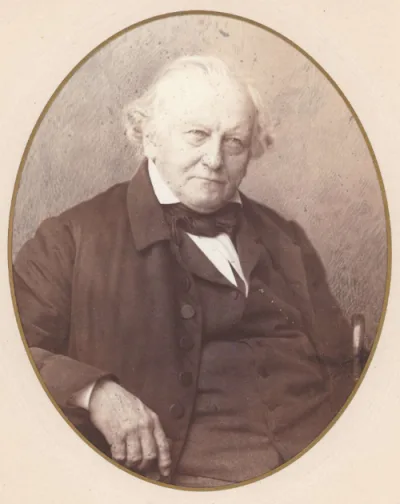
✍️ Author Biography
Abû Ḥâmid Muḥammad b. Muḥammad Ghazzâlî
🌍 English
📚 0 free books
⭐ Known for: Iḥyā’ ‘ulūm ad-dīn
Abû Ḥâmid Muḥammad b. Muḥammad Ghazzâlî was a pivotal Persian scholar, theologian, and mystic, renowned for his spiritual crisis and critique of philosophy.
Abû Ḥâmid Muḥammad b. Muḥammad Ghazzâlî, known in the West as Algazelus, was a highly influential Persian scholar and polymath of the 11th century. He is recognized as a leading figure in Islamic jurisprudence, theology, philosophy, and mysticism, considered by many to be a renewer of the faith. His contemporaries bestowed upon him the honorific title 'Proof of Islam' due to the profound impact and acclaim of his works.
Ghazzâlî's career took a significant turn following a deep spiritual crisis that arose after he assumed the prestigious position of head of the Nizamiyya of Baghdad. This crisis led him to abandon his public life for over a decade, believing he had prioritized worldly status over spiritual devotion. It was during this period of seclusion that he produced many of his most significant writings, including his magnum opus, 'The Revival of the Religious Sciences,' driven by his conviction that the Islamic spiritual tradition had become stagnant and its original teachings forgotten. His work, 'Incoherence of the Philosophers,' significantly challenged Aristotelian thought and influenced philosophical discourse for centuries.
Spiritual Crisis and Renunciation
Around 1095, at the height of his academic career as the head of the esteemed Nizamiyya of Baghdad, Ghazzâlî experienced a profound spiritual crisis. This internal turmoil, characterized by physical and emotional distress, led him to question his motivations and the pursuit of worldly prestige. Believing he had strayed from a path devoted to God, he resigned from his post, feigning a pilgrimage to Mecca. He then divested himself of his possessions and adopted an ascetic lifestyle, embarking on a decade of seclusion. During this period, he focused on spiritual experience and a deeper understanding of Islamic traditions, withdrawing from state-sponsored teaching but continuing to write and teach privately.
Critique of Philosophy and 'Incoherence of the Philosophers'
Ghazzâlî's philosophical contributions are marked by his critical examination of prevailing philosophical thought, particularly that influenced by Greek thinkers like Aristotle. His seminal work, 'Incoherence of the Philosophers' (Tahāfut al-Falāsifa), presented a significant challenge to the philosophical methods and conclusions of his time. In this book, he advanced the concept of theological occasionalism, asserting that apparent cause-and-effect relationships in nature are not inherent properties but rather direct manifestations of God's will. This critique questioned the reliance on reason and natural laws as independent forces, emphasizing divine intervention as the ultimate cause of all events. This work is considered a landmark in Islamic epistemology and philosophy, influencing subsequent intellectual debates.
Mystical Path and Integration of Sufism
Ghazzâlî played a crucial role in bridging the gap between orthodox Islamic scholarship and Sufi mysticism. While adhering to the Shafi'i school of jurisprudence and the Asharite school of theology, he deeply engaged with Sufi principles and practices. He sought to systematize Sufism and integrate its spiritual insights into mainstream Islamic life, believing that the spiritual dimension of Islam had been neglected. His magnum opus, 'The Revival of the Religious Sciences' (Iḥyā’ ‘ulūm ad-dīn), is a comprehensive exploration of Islamic teachings, encompassing both outward religious practices and inner spiritual development, reflecting his commitment to a holistic understanding of faith.
Key Ideas
- Theological occasionalism: Belief that all causal events are direct acts of God's will, not inherent natural laws.
- Critique of Aristotelian philosophy: Questioning the reliance on reason and empirical observation as independent sources of knowledge.
- Revival of Islamic spirituality: Emphasis on the importance of inner spiritual development and Sufi practices within orthodox Islam.
- Spiritual crisis as a catalyst for reform: Personal transformation leading to a re-evaluation of societal and scholarly priorities.
Notable Quotes
“Before I was teaching the knowledge that brought prestige and position…; now, however, I am calling to the knowledge that leads one to renounce position.”
![The alchemy of happiness, tr. from the Turk. [abridgement] by H.A. Homes](/img/thumb/the-alchemy-of-happiness-tr-from-the-turk-abridgement-by-h-a-homes-ab-mid-mu-ammad-b-mu-ammad-ghazz-l.webp)