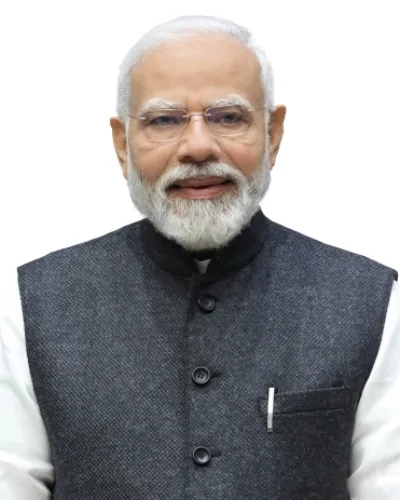
Narendra Modi, India's current Prime Minister, has a long political career rooted in Hindu nationalism and the RSS.
Narendra Damodardas Modi, born in 1950, has held the position of Prime Minister of India since 2014. Prior to this, he served as the Chief Minister of Gujarat from 2001 to 2014. Modi is affiliated with the Bharatiya Janata Party (BJP) and the Rashtriya Swayamsevak Sangh (RSS), a right-wing organization.
His early life involved engagement with the RSS from a young age, becoming a full-time worker in 1971 and later being assigned to the BJP in 1985. He progressed through the party ranks, eventually becoming general secretary in 1998. Modi's tenure as Chief Minister of Gujarat was marked by controversy, particularly concerning the 2002 Gujarat violence, and his administration faced criticism for its economic policies and social development indices.
As Prime Minister, Modi has overseen significant policy changes, including demonetization, the introduction of the Goods and Services Tax, and the revocation of Jammu and Kashmir's special status. His leadership has been associated with democratic backsliding, a shift towards right-wing politics, and remains a subject of international and domestic debate.
Early Life and Ideological Formation
Narendra Damodardas Modi was born in 1950 in Vadnagar, Gujarat. Introduced to the Rashtriya Swayamsevak Sangh (RSS) at the age of eight, he became a dedicated member, eventually becoming a full-time worker in 1971. His early education saw him described as an average student but a gifted debater with an interest in theatre. Modi's association with the RSS and its leaders influenced his political trajectory, leading to his eventual assignment to the Bharatiya Janata Party (BJP) in 1985. During his youth, Modi also undertook extensive travels across India, seeking spiritual guidance and encountering various philosophical traditions, including visits to the Ramakrishna Ashram. He later pursued higher education in political science, obtaining degrees from Delhi University and Gujarat University, though the authenticity of these degrees has been questioned.
Political Ascent and Governance
Modi's political career gained momentum during the 1975-1977 Emergency period, where he played a significant role in coordinating opposition activities against the state of emergency in Gujarat, forcing him to operate clandestinely. He penned a book during this time detailing the struggles in Gujarat. By 1978, he became a regional organizer for the RSS, and in 1985, he was formally inducted into the BJP. His organizational skills were evident in the BJP's successful municipal election campaign in Ahmedabad in 1987, leading to his appointment as the organizing secretary for the Gujarat unit. He was later selected for the party's National Election Committee, contributing to key party initiatives like the Ram Rath Yatra.
Prime Ministership and National Impact
In 2001, Modi became the Chief Minister of Gujarat, a position he held until 2014. His administration faced significant criticism for its alleged complicity in the 2002 Gujarat violence. Despite economic growth credited to his policies, his government was also faulted for not adequately improving health, poverty, and education metrics. In 2014, Modi led the BJP to a decisive victory in the general election, becoming Prime Minister. His subsequent terms have seen major policy shifts, including economic reforms, national security actions like the Balakot airstrike, and significant legislative changes such as the revocation of Jammu and Kashmir's special status and the Citizenship Amendment Act, which triggered widespread protests. His leadership has been characterized as engineering a shift towards right-wing politics and has been linked to concerns about democratic backsliding and freedom of expression.
Key Ideas
- Hindu nationalism
- Hindutva ideology
- Right-wing politics
- Economic development
- Democratic backsliding
Books by
1 free public domain book · Read online or download