A Critical Edition
Textual criticism is the scholarly study of texts to reconstruct original versions and understand their transmission history.
Textual criticism is a scholarly discipline focused on identifying and understanding variations within texts, whether they exist as manuscripts or printed books, spanning from ancient cuneiform to modern works. Historically, manual copying by scribes, who may not have fully understood the content, often introduced unintentional alterations. Intentional changes, such as censorship for political or religious reasons, and interpolations like added explanatory notes, also occurred. The primary goal of a textual critic is to establish the most accurate version of a text, often by reconstructing the original or an intermediate stage of its transmission. This process aims to provide a deeper understanding of how a text was created and evolved over time, leading to the creation of a 'critical edition' that presents a scholarly curated version of the work.
This field has a history of over two millennia, with early practitioners like the librarians of Hellenistic Alexandria working to preserve ancient works. Renaissance humanists also engaged in textual criticism, notably Desiderius Erasmus in his work on the Greek New Testament. The discipline is crucial for texts surviving through numerous copies where the relationship to the original is unclear, such as ancient plays or religious scriptures. While originally developed for classical and biblical texts, its principles have been applied to a vast range of works across different cultures and time periods, including literary masterpieces like those of Shakespeare. The ultimate aim is to produce a text as close as possible to the author's original intent, often accompanied by a critical apparatus detailing the evidence and editorial decisions.
The Nature and Objectives of Textual Criticism
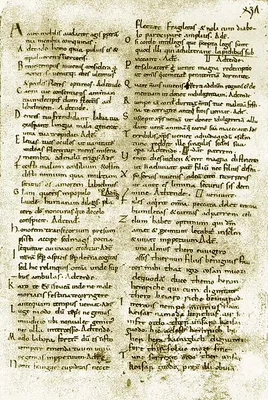
Textual criticism is fundamentally concerned with the variations found in different versions of a text, whether handwritten manuscripts or printed books. Its objective is to reconstruct the original text as faithfully as possible, or at least to understand the history of its transmission. This involves analyzing errors introduced by scribes, who might copy inaccurately due to lack of comprehension, or by compositors in the printing process. Intentional alterations, such as censorship or the insertion of new material (interpolation), also complicate the textual landscape. Scholars aim to identify the 'archetype' or 'urtext'—the earliest traceable version—and to produce a 'critical edition'. This edition presents the editor's best approximation of the original text, supported by a critical apparatus that details the textual evidence, scholarly analysis, and rejected readings.
Historical Practice and Application
The practice of textual criticism spans over two thousand years, originating with ancient scholars seeking to preserve classical and religious texts. Early practitioners, such as the librarians in Hellenistic Alexandria and later Renaissance humanists like Erasmus, Poggio Bracciolini, and Lorenzo Valla, dedicated themselves to collecting, comparing, and editing manuscripts. This work became particularly vital for texts that survive through numerous copies, where discerning the original readings is a complex challenge. The principles have been applied to a wide array of works, from ancient Mesopotamian documents to modern literature, with significant attention given to texts like the Bible, Greek tragedies, and the works of William Shakespeare due to the extensive variations present in their surviving copies. Recent discoveries, such as the Sana'a manuscripts, have also spurred interest in applying these methods to texts like the Quran.
Methods and Approaches
Various methods are employed in textual criticism to navigate the complexities of textual transmission. Eclecticism involves consulting a wide range of textual witnesses and selecting readings based on scholarly judgment, assuming that diverse transmission histories increase the likelihood of identifying original readings. Stematics, on the other hand, attempts to reconstruct the relationships between different manuscript versions, often using a family tree (stemma) to visualize their descent from an archetype. Copy-text editing prioritizes a single, chosen manuscript as the basis for the edition, making minimal alterations. Quantitative techniques, including methods borrowed from evolutionary biology (phylogenetics), are also utilized to analyze the relationships between textual witnesses. 'Lower criticism' refers specifically to textual criticism, distinguishing it from 'higher criticism,' which focuses on authorship, date, and historical context.
Key Ideas
- Textual variants: Different versions of a text arising from errors or intentional changes during copying or printing.
- Critical edition: A scholarly curated version of a text, aiming to be the closest approximation of the original.
- Archetype/Urtext: The earliest traceable version of a text, often theorized but not always extant.
- Critical apparatus: A scholarly commentary accompanying a critical edition, detailing textual evidence and editorial decisions.
- Eclecticism: A method of textual criticism that selects readings from various sources based on scholarly judgment.
- Stematics: A method that reconstructs the genealogical relationships between different manuscript versions of a text.
- Copy-text editing: A method that uses a single chosen manuscript as the primary basis for an edition.
Notable Quotes
“We have no autograph [handwritten by the original author] manuscripts of the Greek and Roman classical writers and no copies which have been collated with the originals; the manuscripts we possess derive from the originals through an unknown number of intermediate copies, and are consequently of questionable trustworthiness.”
“A dictation revised by the author must be regarded as equivalent to an autograph manuscript.”
“If we succeed in establishing the text of [the archetype], the constitutio (reconstruction of the original) is considerably advanced.”
“The constitutio textus: The reconstruction of the original text.”
Books by A Critical Edition
1 free public domain book · Read online or download