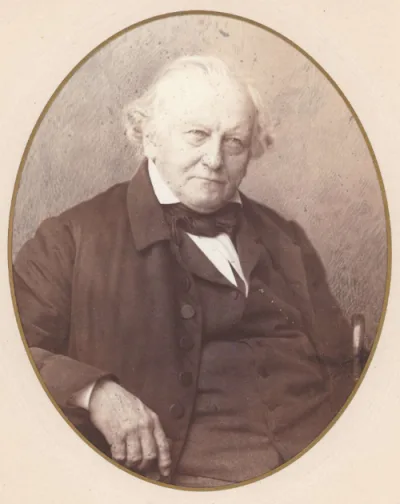
A. Cockren
A. Cockren's work explores the historical and philosophical roots of psychology, tracing its development from ancient thought to modern scientific inquiry.
The study of the human mind and behavior, known as psychology, has ancient origins, with philosophical inquiries into these subjects appearing in civilizations like Egypt, Persia, Greece, China, and India. Experimental psychology emerged in the mid-19th century in Germany with figures like Gustav Fechner and Wilhelm Wundt, who established the first dedicated laboratory. Early contributors also included Hermann Ebbinghaus, William James, and Ivan Pavlov. The field soon diversified into applied areas, with psychologists like G. Stanley Hall, John Dewey, Hugo Münsterberg, Lightner Witmer, and James McKeen Cattell contributing to pedagogy, industry, law, and mental testing. Sigmund Freud developed psychoanalysis independently in Vienna, a theory that significantly influenced the field. The 20th century saw a shift towards behaviorism, emphasizing observable actions, and later, the rise of cognitive science, which integrated various disciplines to study the mind. Psychology is often conceptualized in 'waves,' reflecting evolving schools of thought and therapeutic practices, from early behaviorism and psychoanalysis to humanistic, existential, and transpersonal approaches, with ongoing efforts to unify these perspectives.
Ancient Philosophical Roots of Psychological Inquiry
Long before psychology became a formal scientific discipline, ancient civilizations engaged in profound speculation about the mind, soul, and consciousness. In Ancient Egypt, texts like the Edwin Smith Papyrus offered early descriptions of the brain and its potential functions within a medical context. Ancient Greek philosophers, from Thales onwards, developed intricate theories concerning the 'psyche' and related concepts, with thinkers like Alcmaeon identifying the brain as the seat of thought. Plato's tripartite theory of the soul and Aristotle's work, particularly 'De Anima,' laid foundational ideas that would influence Western thought for centuries. The Stoics and Epicureans also explored the physiological underpinnings of the mind, with the Roman physician Galen providing influential elaborations. These philosophical traditions, spanning across Greek, Roman, Judeo-Christian, and Islamic thought, established early frameworks for understanding human nature and mental processes.
Eastern Traditions and Early Psychological Concepts
Across Asia, distinct traditions also contributed to early psychological thought. Ancient China developed sophisticated systems for testing abilities within its education system and documented neuropsychiatric conditions, conceptualizing psychosis as an 'imbalance.' Philosophical schools, dating back to Confucius, explored stages of human development. An early experiment in distraction was reportedly conducted by Lin Xie in the 6th century AD. In India, the Vedanta philosophy proposed theories of 'the self' and levels of consciousness ('koshas'). Sankhya philosophy detailed components of the mind, including intellect and ego. Patanjali, a founder of Yoga, developed a system focusing on breath and mind for psychological resilience, with practices potentially used therapeutically for mental disorders. Buddhist philosophies also formulated complex theories of the mind, including concepts like aggregates and non-self.
The Emergence of Experimental Psychology
The formal establishment of psychology as an experimental science began in the mid-19th century. Gustav Fechner, in 1854, developed the first theory on how sensory judgments are made and how to experimentally test them, a concept now recognized as Signal Detection Theory. This work laid groundwork for statistical approaches to comparative judgment. In 1879, Wilhelm Wundt founded the first laboratory exclusively for psychological research in Leipzig, Germany, and was the first to identify himself as a psychologist. Precursors like Ferdinand Ueberwasser, who lectured on empirical psychology, also existed. Other key early figures who advanced the scientific study of specific mental functions include Hermann Ebbinghaus for memory, William James for pragmatism, and Ivan Pavlov for classical conditioning. The subsequent development of applied psychology saw contributions in education, industry, law, and clinical settings.
Key Ideas
- Psychology as the scientific study of behavior and mental processes.
- Ancient philosophical inquiries into the mind and soul across various cultures.
- The development of experimental psychology in 19th-century Germany.
- The emergence of applied psychology in areas like education, industry, and law.
- The influence of psychoanalysis and behaviorism in the 20th century.
- The rise of cognitive science and interdisciplinary approaches to the mind.
- Conceptual 'waves' of psychology, including humanistic, existential, and transpersonal approaches.
Books by A. Cockren
0 free public domain books · Read online or download